Offline dictation on Windows
If you want to talk instead of type on a Windows 10 or 11 PC with the network switched off, you need
a tool that does the speech recognition on your own processor. Deixis does: you hold Ctrl+Win,
speak, let go, and clean punctuated text appears in whatever field you were already in, with the
recording, the model and the transcript never leaving the machine. There is no account, it is free,
and it works the same on a plane as it does at your desk.
This page is for anyone who has been burned by a "voice typing" feature that goes quiet the moment the wifi drops, or who works somewhere the audio simply may not go out — a locked-down corporate network, a machine with no route to the internet, a laptop on a train. It explains what "offline" honestly means, exactly what Deixis does and does not send, and which of the other tools on this site also recognise speech on the device. Several of them do, and they are named below.
What you get
More than dictation. One key, and everything behind it.
Hold the key and press a letter: free mode, a grab, a meeting, a recording, a translation, your own buttons. All of it on your own device, all of it free, none of it behind an account.
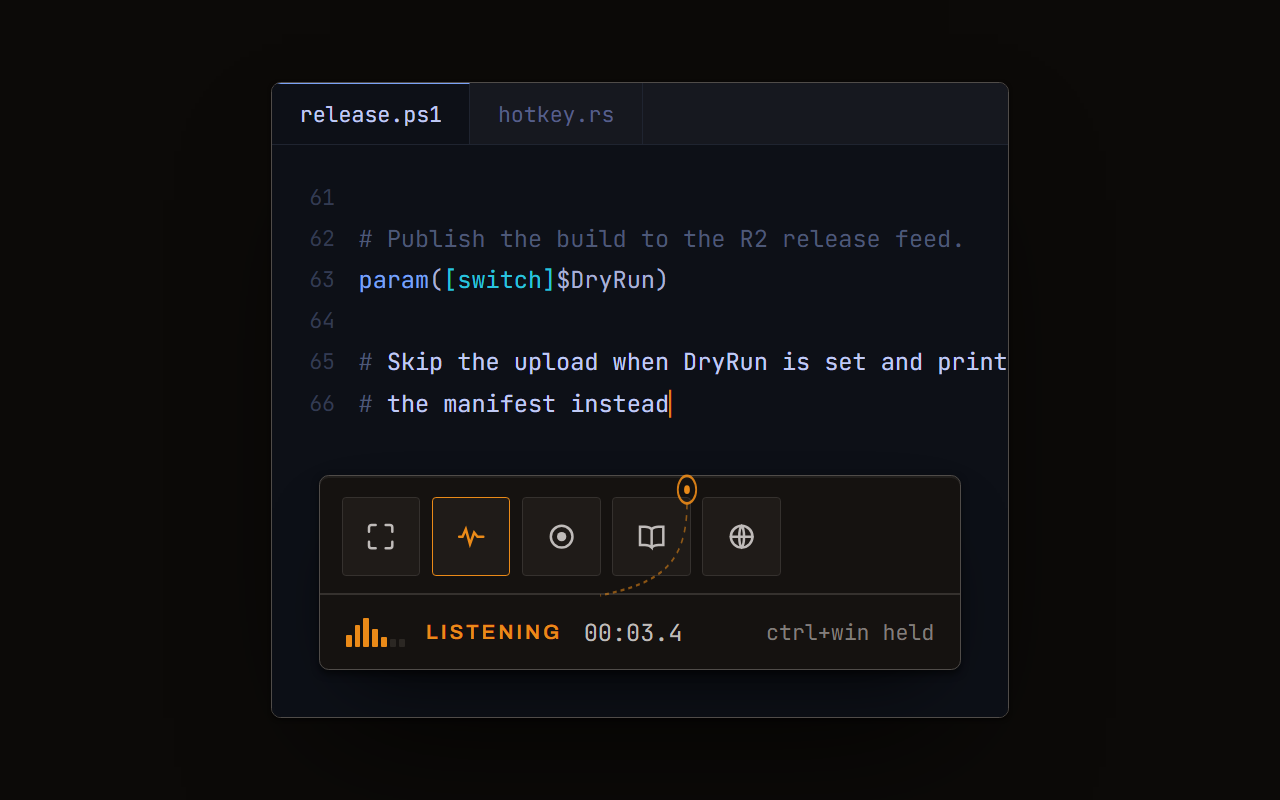
Dictation, where your cursor is
Hold a key, speak, release. Clean, punctuated text lands in whatever has focus, on your PC, your Mac and your phone, with your clipboard handed back.
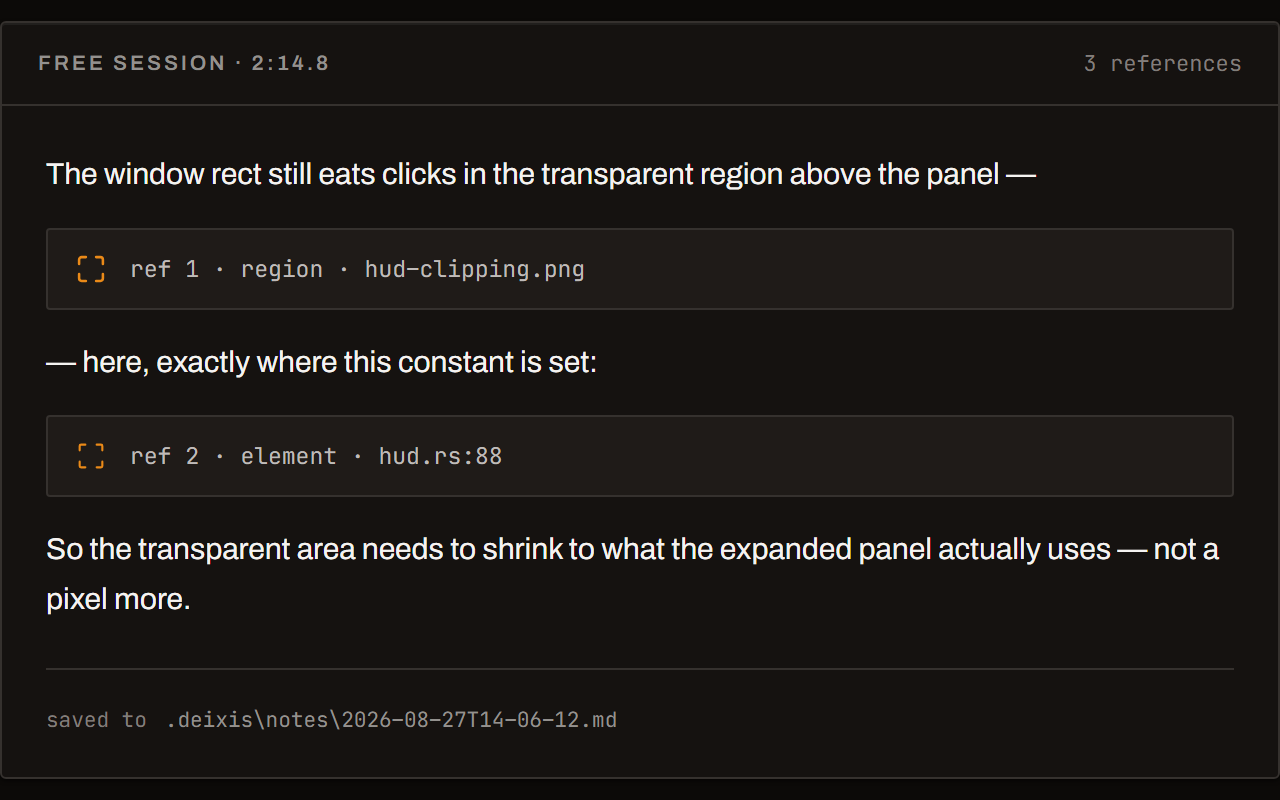
Free mode: talk and point
Narrate for as long as you like while you grab a region, pick a button on screen or take a selection. One note, what you said interleaved with what you pointed at, pasted where you finish and saved as Markdown.
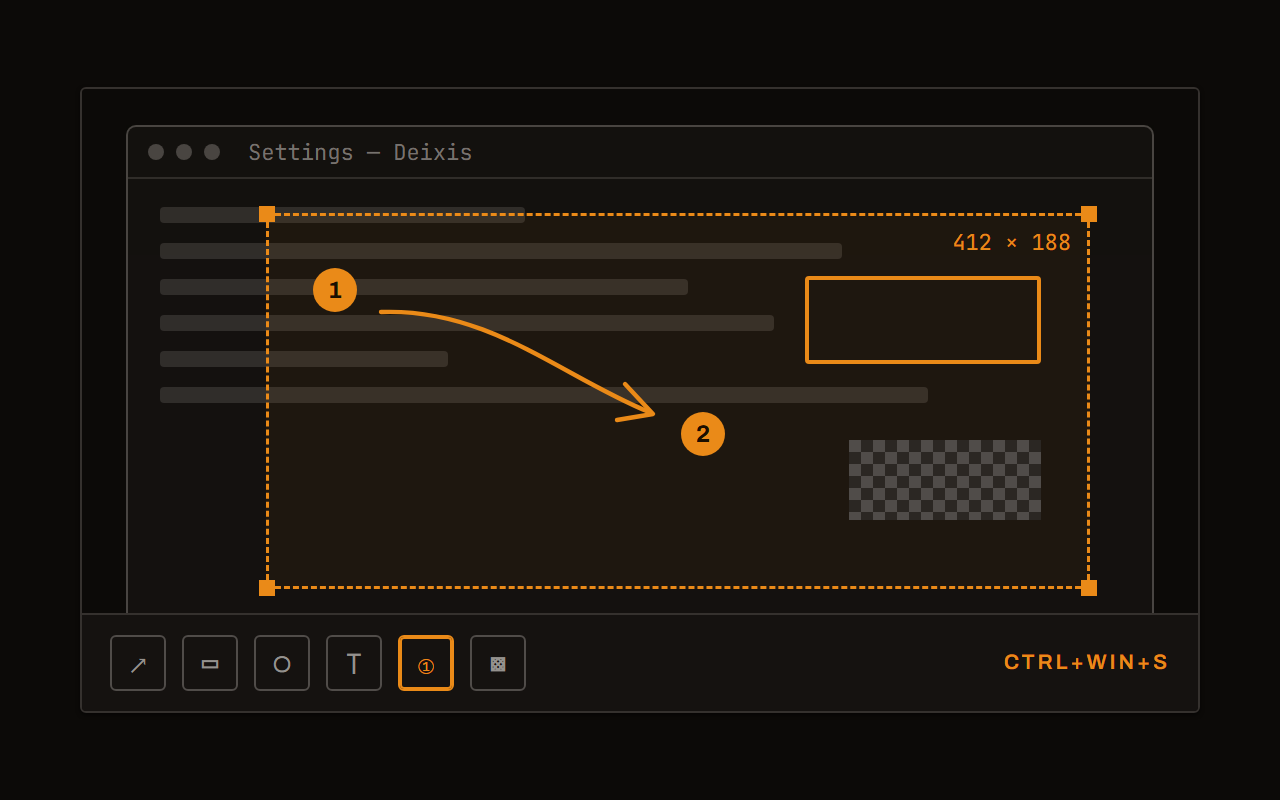
Screen grabs, annotated
Freeze every screen at the keypress, drag a region, add arrows, boxes, text and numbered steps, and pixelate what is private. Saved as a PNG that stays editable.
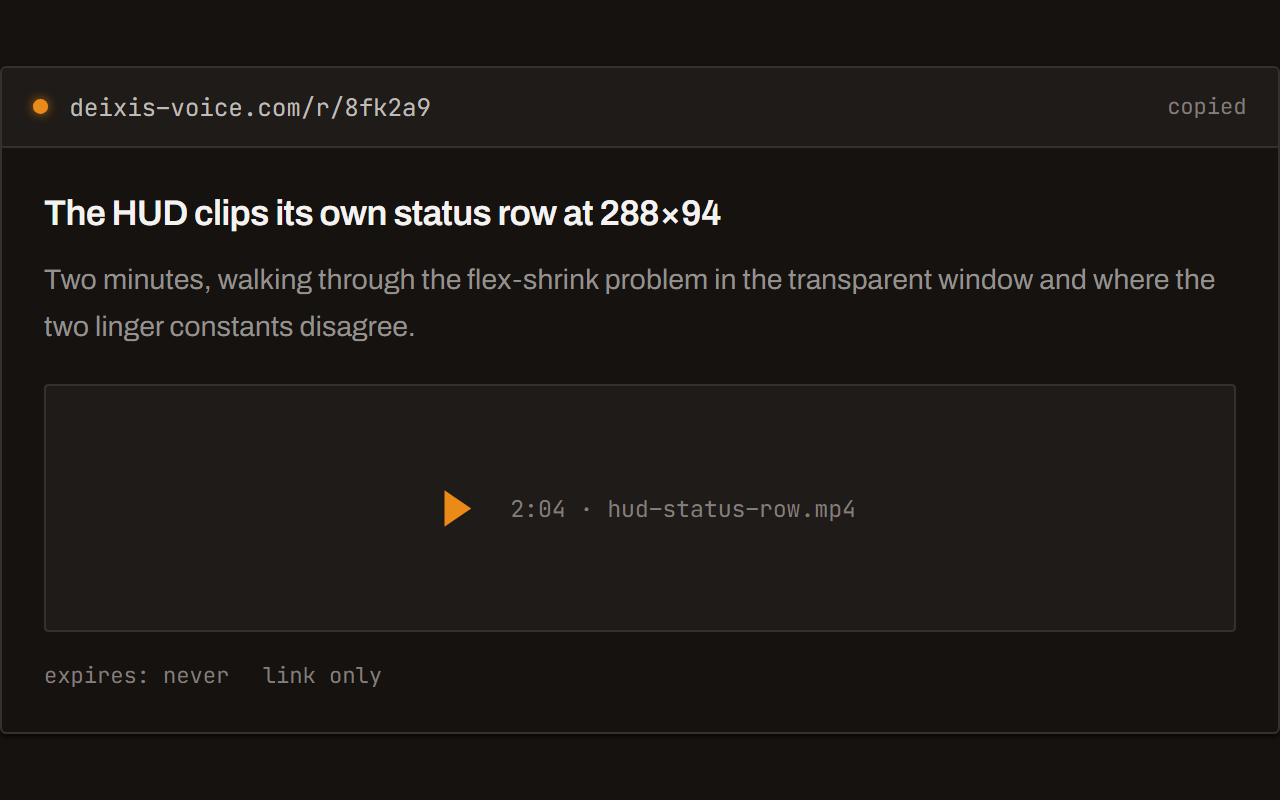
Screen recording, shared as a link
Record the screen with your narration. The recording writes itself up with a title, chapters and a summary, and from your Deixis account it shares as a link anyone can open without one. The Loom you can stop paying for.
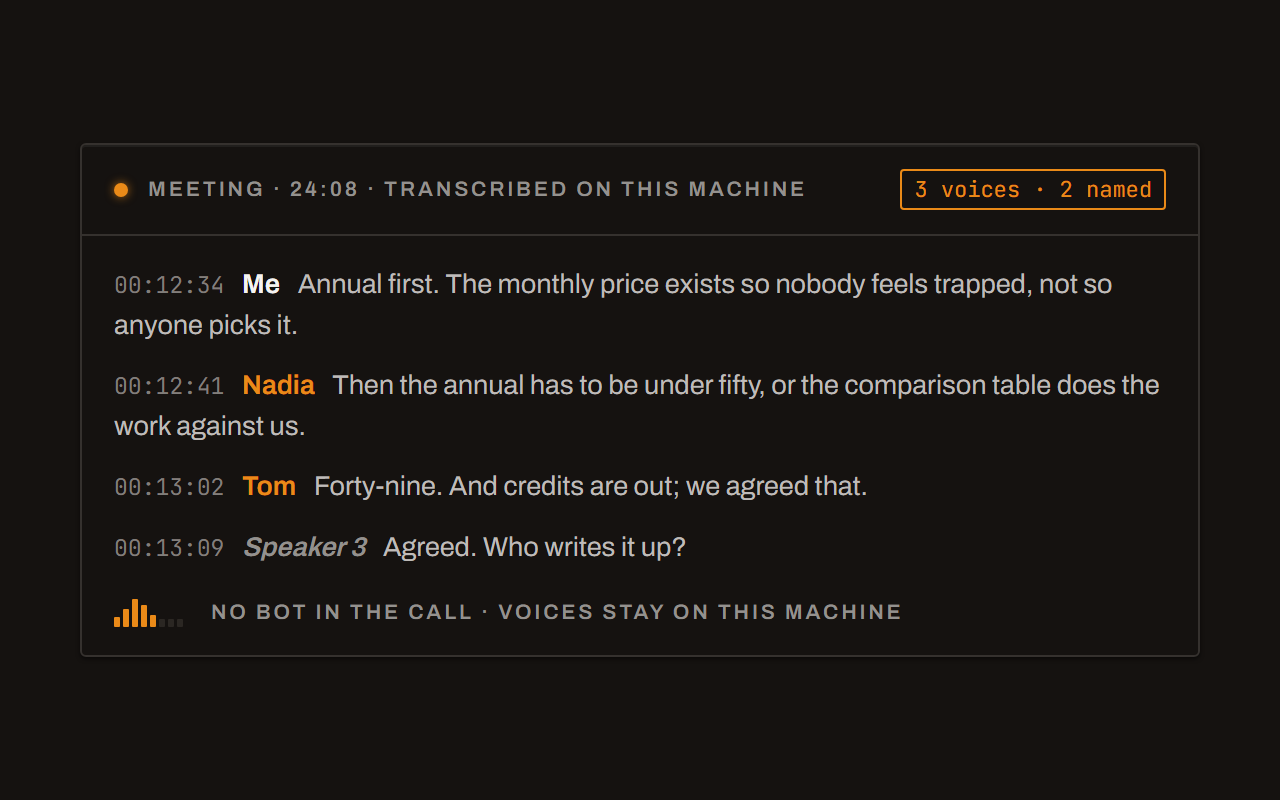
Meetings, no bot, names included
Your microphone and the other side, transcribed on your machine while the call runs. Deixis tells the voices apart and remembers the ones you name, and never uploads a voice.
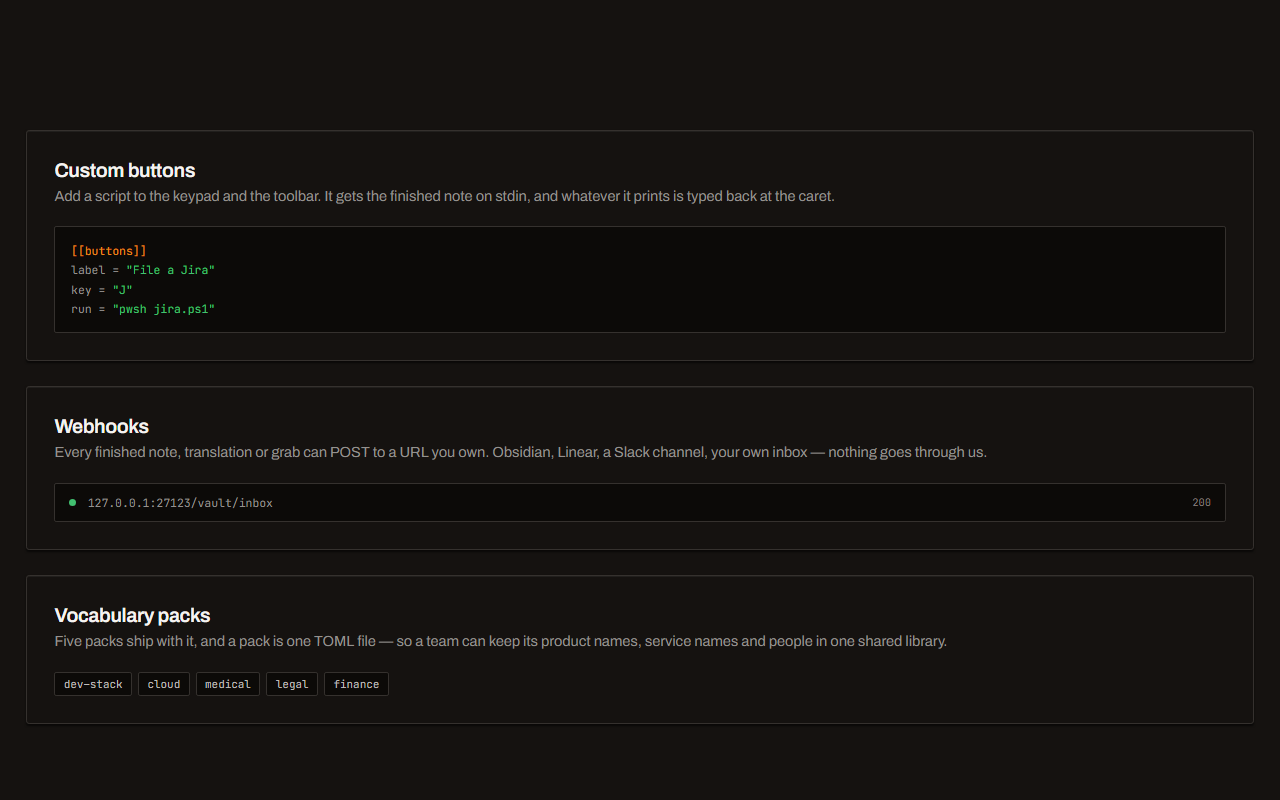
Your own buttons and workflows
Add a button to the palette: it gets the note on stdin and types back whatever it prints. Send finished notes to any URL you own. Chain steps: read the text off a screenshot, translate it, summarise it, post it.
Offline dictation on Windows
What "offline" actually means
The word gets stretched. A tool can call itself offline because your notes are stored on your disk, or because it caches text while the connection is down and uploads it later. None of that is the thing that matters. There is exactly one question worth asking: where does the audio turn into words?
If recognition happens on your device, the audio never has to go anywhere, and dictation keeps working when nothing else does. If recognition happens in the cloud, your voice is a network request — which means no connection, no words, and a copy of what you said sitting on somebody's server for however long their policy says. Everything else about a dictation tool is a detail by comparison.
There are three honest answers, and the table further down gives each tool's:
- On your device. The engine and the model sit on your machine. Dictation works with the network unplugged. This is where Deixis is, always, on every platform it runs on.
- Either, your choice. The tool ships a local engine and a cloud one, and a setting picks. These are genuinely fine choices — just check which way the setting ships, because the default is what most people will actually use.
- In the cloud only. No connection, no dictation. Windows' own voice typing — the
Win+Hfeature — is in this group: Microsoft's support page says it uses online speech recognition and needs an internet connection. (Microsoft's separate Voice access feature does work without one, in four languages, but it is a way of controlling the computer rather than the dictation feature people mean when they ask.)
A second question is worth asking straight after: does it need an account? A tool can recognise on your device and still refuse to start until you have signed in, which puts a network dependency back in front of the thing you installed to avoid one. Deixis has never asked anyone to sign in to dictate, and it never will.
What Deixis does when the network is gone
Nearly all of it. With no cleanup destination configured, these all run entirely on your machine, with no account and nothing to switch on:
- Dictation. Hold the chord, speak, release, and the text lands at the caret in whatever app has focus — your editor, your terminal, your email, a browser box. Your clipboard is handed back the way you left it.
- Free mode. Double-tap the chord instead and it keeps listening until you double-tap again, while you drag a region of the screen, pick an element or take a selection. What you said and what you pointed at come out as one note, pasted at the caret and saved as a file.
- Your dictionary. The single biggest accuracy lever, and it costs nothing in speed. Select a word anywhere, press one key, and it is in your vocabulary; names it keeps mishearing can be corrected once and stay corrected. Five vocabulary packs ship in the box and you can drop in your own.
- Screen grabs. Freeze the screen, drag a region, quick-save it or open the annotation editor — arrows, boxes, pen, highlighter, text, redaction and numbered step badges. Every save keeps a sidecar so the grab stays re-editable rather than flattened forever.
- Screen recording. One chord records the screen you are on to a video file and the same chord stops it, with a small bar and the tray icon showing that it is rolling. If a microphone was recorded, what you said is transcribed on this machine. The short title and summary written for each recording are the one part that wants a language model: point Deixis at one running on your own machine and that stays offline too, and with nothing configured you still get the transcript.
- Meetings. Deixis records your microphone and, where the system allows it, the other side of the call, and transcribes both on this machine while they run. The readable transcript is written to disk with no key, no account and no network at all. It tells the remote voices apart and remembers the ones you name, and the voiceprint that does it stays on the machine, is never uploaded, and can be deleted per person.
- Your own buttons and workflows. Add an action to the palette that runs a program with your finished note and types back whatever it prints — file the ticket, get the key back at your caret. Or chain steps together as plain settings, with a template library of ready-made ones. Webhooks go to URLs you own, signed, and never through anybody else's cloud.
Now the honest part, because a privacy page is only worth reading if it says what does leave.
Two calls a fresh install makes on its own, and neither carries anything but the request. The update check runs at launch and when you ask for it in Settings; the version comparison happens on your machine. And when you open the Settings window, Deixis asks whether we have posted an announcement — a short notice, drawn as a popup you can dismiss. Which ones you have dismissed stays on your machine, and announcements have an off switch of their own.
The speech model is a one-time download you press a button for. The installer does not carry the weights, so the first launch shows one Download button. That request sends nothing but the request either. After it finishes, dictation is done with the network.
One key asks a question of somebody else's service, and only when you press it. Ctrl+Win+C
shows how much of your Claude plan is left, which it can do only by reading the sign-in Claude Code
has already stored on this machine and asking Anthropic. It needs no endpoint of yours because
neither the sign-in nor the address it goes to is ours, and it carries nothing of yours besides that
sign-in: no audio, no text, no transcript. Never press it and nothing ever goes to Anthropic.
Three optional routes exist and are off until you configure a destination: cloud cleanup of a dictated sentence, translating a selection, and meeting notes. With no destination set, cleanup falls back to a rules engine on your machine and the other two simply do not happen. And if you want a language model's polish without a network, you can point all three at a model running on your own machine instead — that is a supported setting, not a workaround, and there is deliberately no fallback to the internet if that local server is down.
Your audio is never uploaded by anything, under any setting, on any plan. The recording a dictation makes, the audio of a meeting and the microphone track of a screen recording all stay on the machine. There is no setting that changes that, and no feature that depends on changing it.
The one feature that uploads a file of yours is handing a recording, a grab or a note to somebody as a link, because being uploaded is what a share link is. It is a file you picked, at the moment you pressed Share; a meeting recording cannot be shared at all. Making a share link needs a Deixis account, though the person you send it to needs nothing, no app and no sign-in. Everything that produced the recording happened offline; only the sharing does not.
How the tools compare
Deixis is at the top because this is the Deixis website and Deixis is our product — the rest is alphabetical, and the facts in every row come from that maker's own pages on the date beside it. Read down the middle column: it is the one that decides whether the tool is any use to you on a plane. Ours and Whisperstream's are the two rows that answer both columns without a condition attached.
| Tool | Dictates with no network? | Account needed |
|---|---|---|
| DeixisWindows 10 and 11 (64-bit, on a CPU with AVX2: 2013 and later), Mac (Apple Silicon) and Android (a dictation bubble in any app, plus meetings), with an iPhone keyboard in beta on TestFlight and not yet in the App Store. One engine on all of them, and dictation audio never leaves the device. | On your own device, inside the app, on every platform. Your audio never leaves it. | None, ever, for anything that runs on your device. The cloud extras have a seven-day trial you start with an email code. No card. |
| Aqua VoicemacOS, Windows, iOS | No — recognition runs in the cloud | Requiredchecked 2026-09-05 |
| Dragon ProfessionalWindows 10 and 11, Windows Server 2016, 2019 and 2022 | Yes — recognition on your device | not documentedchecked 2026-09-05 |
| MacWhispermacOS | Your choice — it offers on-device and cloud recognition | not documentedchecked 2026-09-05 |
| Otter.aiWeb browser, Windows and macOS (12.3 or later) desktop app, iOS 15 or later, Android 5.0 or later, Chrome extension | No — recognition runs in the cloud | Requiredchecked 2026-09-05 |
| SuperwhispermacOS, Windows, iOS | Your choice — it offers on-device and cloud recognition | not documentedchecked 2026-09-05 |
| TalonWindows 8 or newer, macOS 10.13 or newer, Linux (X11 only) | Yes — recognition on your device | not documentedchecked 2026-09-05 |
| TypelessWindows, macOS (Apple Silicon and Intel), iOS, Android | No — recognition runs in the cloud | Requiredchecked 2026-09-05 |
| VoiceInkmacOS | Your choice — it offers on-device and cloud recognition | not documentedchecked 2026-09-05 |
| WhisperstreamWindows 10 or 11, 64-bit | Yes — recognition on your device | Nonechecked 2026-09-05 |
| Willow VoicemacOS, Windows, iOS | Your choice — it offers on-device and cloud recognition | Requiredchecked 2026-09-05 |
| Windows Voice TypingWindows 11, Windows 10 | No — recognition runs in the cloud | not documentedchecked 2026-09-05 |
| Wispr FlowWindows 10 or 11 (x64 only, no ARM), macOS 12 or later, iOS, Android | No — recognition runs in the cloud | Requiredchecked 2026-09-05 |
The fair thing to say is that Deixis is not alone. Whisperstream is the closest tool on this site — push-to-talk dictation on Windows, recognition on your own processor, no account — and it is a paid product after a short trial, where Deixis dictates free forever. Dragon Professional has been doing local recognition on Windows since long before any of this, and remains the serious choice for people who dictate all day and need its editing commands. Talon runs its recognition locally too, and is aimed at controlling the whole computer by voice rather than at typing prose — for people who cannot use a keyboard at all, it is a different and often better answer.
Four more offer a local option rather than being built around one. Superwhisper lets you transcribe with a local Whisper model on Windows as well as on the Mac, though its own docs say local language models are Mac-only; Willow Voice lists offline dictation on its paid individual plan without saying which platforms carry it; and VoiceInk and MacWhisper, both Mac software, let you choose a local engine too.
Where Deixis differs from all of them is the surface area that stays offline. On Windows it is not only the dictation: free mode, the grabs and the annotation editor, the screen recordings with their local transcripts, the meeting recording and transcription, the dictionary and your own buttons all run with the network unplugged. The other three builds carry a different slice each — the Mac has dictation, free mode, grabs and screen recording; the iPhone is a keyboard; Android is a dictation bubble with meetings — and what they have in common is the part that matters here: recognition happens on the device, every time.
Why offline dictation is worth choosing
The practical case is the easy one. A plane, a train through a tunnel, a hotel with a captive portal, a client site whose guest network blocks everything interesting, a machine that has no route out at all — these are ordinary working conditions, and they are exactly when a cloud dictation tool becomes a button that spins. A tool that recognises on your device does not have good days and bad days. Its speed does not depend on somebody else's servers, and it does not stop working because a provider is having an incident.
The privacy case is quieter and, for a lot of people, the one that decides it. Your voice is not the same as your text. It carries who you are, who is in the room, and everything you said before you thought better of it. If it never leaves your machine, no policy has to be trusted, no retention setting has to be checked, and no account has to be kept honest. That is not a claim about anybody else's conduct — it is that the safest data is the data that was never sent.
It also makes an easier conversation at work: "the audio stays on the laptop" is a sentence a security reviewer can check by unplugging the network.
Before you ask
Questions people search for
Is there a dictation tool for Windows that works with no internet?
Yes. Deixis recognises speech on your own processor, so dictation, free mode, the dictionary, screen grabs, screen recording and meeting transcription all work with the network switched off, free and with no account. Several other tools recognise locally too — the table above says which.
Does Windows voice typing work offline?
No. The Win+H voice typing feature uses online speech recognition and needs an internet connection,
per Microsoft's own support page. Microsoft's separate Voice access feature does work without one in
a few languages, but it is for controlling the computer rather than for dictating prose.
Does Deixis send anything at all if I leave it alone?
Two things, neither carrying anything but the request: the update check, which compares versions on your machine, and — only when you open the Settings window — a check for an announcement from us, which you can switch off. The speech model is a one-time download you press a button for. Cloud cleanup, translation and meeting notes are off until you set a destination, and can be pointed at a model on your own machine instead.
Do I need an account or a subscription to dictate offline?
No. Dictation, both speech models, the dictionary and its packs, free mode, screen grabs, screen recording, meeting recording and transcription, your own buttons and your webhooks are all free with no sign-in at all. Paying only removes the setting-up of the optional cloud features.
Is offline dictation as accurate as the cloud kind?
Close enough that the dictionary matters more than the engine. The biggest single improvement is teaching it the words you actually use — product names, library names, the jargon of your job — which takes one key press per word and costs nothing in speed. There is also a larger, more accurate speech model in Settings if you dictate long prose.
What does need the internet?
Sharing. Turning a screen recording, a grab or a note into a link that somebody else can open means uploading it, so that needs a Deixis account — though whoever you send the link to needs nothing. Cloud cleanup, translation and meeting notes need a destination you configure, and that destination can be a model on your own machine.
Keep reading
Related pages
Is voice typing private? Eight things a dictation app can send, and how to check each one
Voice typing can send your audio, your words and even a screenshot. How to check what any dictation app sends, and exactly what Deixis sends.
Speech to text offline: how to keep dictating when the internet goes
How to dictate with no internet on Windows, Mac, Android and iPhone, what offline really covers, what to do before you go, and what still needs a network.
Best dictation software for Windows
Thirteen Windows dictation tools compared, every fact dated from the maker's own pages — including what our own tool cannot do. Read the disclosure.
Free voice to text that types where you are
Free dictation that types into any app: hold a key, speak, and punctuated text lands at your cursor. Recognition runs on your own processor.
Voice input for your product, without the audio leaving your user
Put voice input in your web or desktop app in about ten lines. Recognition runs on your user's machine, so no audio reaches you, us, or any cloud.
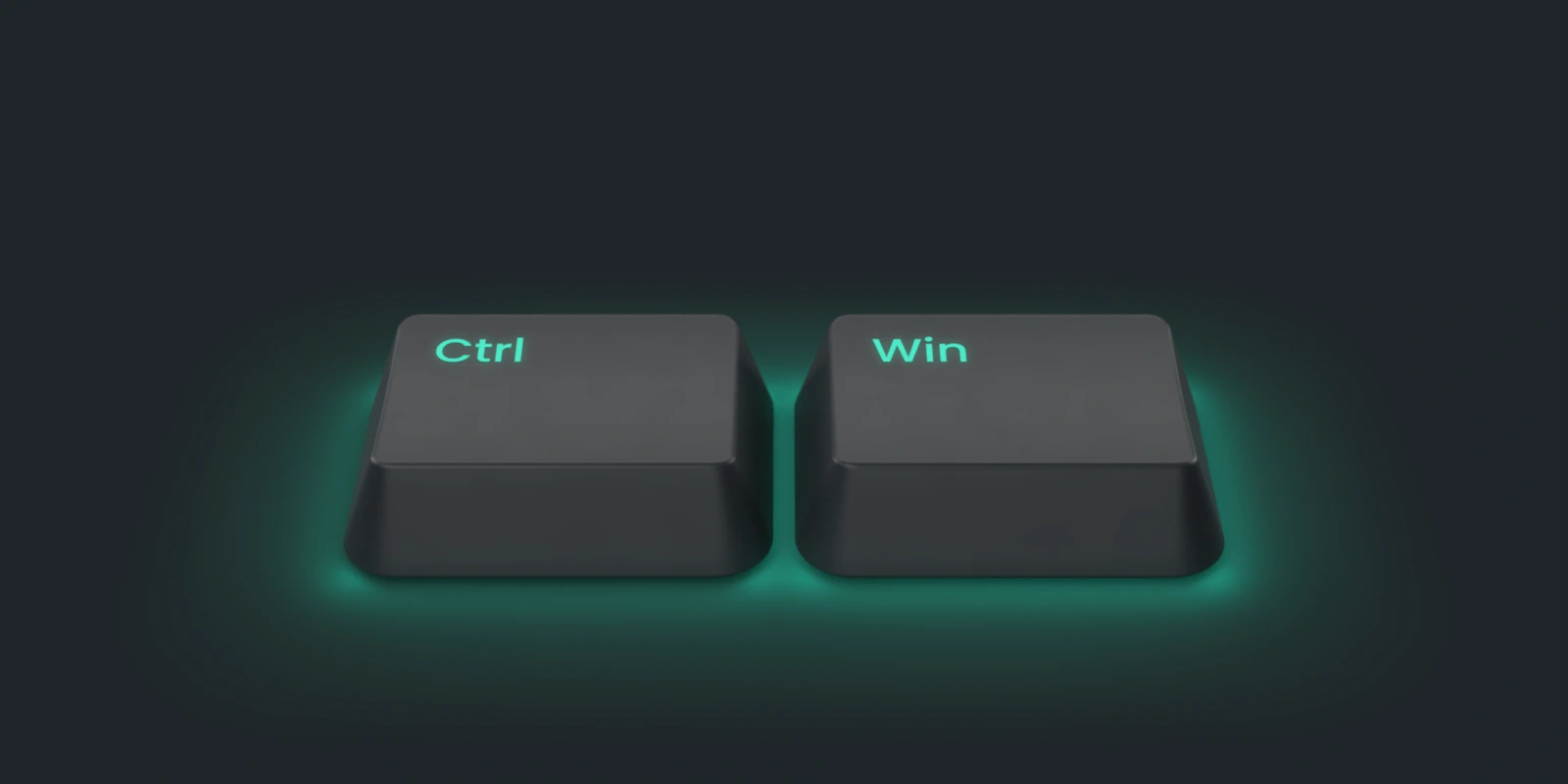
Hold a key. Speak. Keep working.
Deixis is free, needs no account, and runs on your own device. Everything on this page is in the current release.
v1.2.2 · 64‑bit Windows 10/11 · macOS 13 on Apple silicon · 51 MB · nothing else to install · also for Windows
Every fact about another tool here comes from that tool's own pages, on the date beside it; the oldest was read on 2026-09-05. Deixis facts are from its README for the current release. Something out of date? Tell us.