The Talon alternative, if all you want is to dictate
Talon is not really a dictation tool, and this page will not pretend it is. Its own docs say it "aims to bring programming, realtime video gaming, command line, and full desktop computer proficiency to people who have limited or no use of their hands". If that is you, Talon is the right choice, Deixis is not a replacement for it, and the rest of this page is for the other person: someone who found Talon while looking for a way to stop typing so much, opened the docs, and saw how much there is to learn before the first sentence appears.
For that person, Deixis is the short route. Hold Ctrl+Win, say the sentence, let go, and clean,
punctuated text lands where your cursor was, in your editor, your terminal, a ticket or a chat. No
scripts to clone, no alphabet to memorise, no command grammar. Recognition runs inside the app on
your own device, on Windows, the Mac and Android and in an iPhone keyboard now in beta, so your dictation audio never leaves the machine;
there is no account, and everything that runs locally is free.
The two tools are built for different jobs, and the honest comparison is about which job is yours. Talon replaces the keyboard and the mouse. Deixis replaces typing, and adds the things that go with it: field-aware cleanup, meetings, screenshots and screen recording.
Why switch
What you gain, and what you give up
Why Deixis
- Nothing to learn before the first sentence. Talon's docs are clear: "Talon won't recognize any
commands until you add some scripts", and the getting-started steps go through the home
directory, the community repository and installing the speech engine from a menu. Deixis is
install, press Download once, hold
Ctrl+Win, speak. - One tool, on every device you own. Windows, Mac and Android, and an iPhone keyboard in beta, with the same on-device speech recognition on each; your dictation audio never leaves any of them. On the iPhone it is a keyboard with a microphone key, on Android a floating microphone that dictates into any app.
- It is made for prose. Deixis's job is the sentence: punctuation, capitalisation, filler words removed, your names spelled the way you spell them, and a transform on request, "make this a bullet list". You never spell out punctuation.
- It knows what you are typing into. A commit message, a chat reply and a ticket are punctuated differently, and Deixis does that automatically because it knows which app and which field the text is going into. Only the names of the app and the field ride along with a cleanup request; never the window title, never the screen.
- No metrics, no crash reports, and nothing identifying in the calls we do make. Talon's licence agreement says usage metrics "may be uploaded to a Talon-owned server", that a crash report is uploaded automatically the next time Talon starts, and that if you opt into automatic updates your IP address and app version go to its update server. All of that stays away from speech and text, and Talon says so. Deixis sends none of it: no account and no telemetry. It makes two calls on its own — an update check, and a check for an announcement from us when you open the Settings window — and neither carries anything but the request. Announcements can be switched off entirely.
- Meetings, screenshots and screen recording in the same key.
Ctrl+Win+Mrecords your microphone and what your speakers play and transcribes both sides on your PC, with no bot in the call. The remote voices are told apart on the device; name one and it is recognised in later meetings, from a voiceprint that stays on your machine, is never uploaded and can be deleted per person. Notes and action items are one optional step that needs an endpoint you choose.Ctrl+Win+Sfreezes the screen, lets you drag a region and annotate it with arrows, boxes, numbered steps or a pixelated redaction.Ctrl+Win+Vrecords the screen. Free mode lets you talk while pointing at things and hands you one note with both. - Your vocabulary, in one keypress. Select a word anywhere and press
Ctrl+Win+D. Five vocabulary packs ship in the box, for software, finance, business, medicine and law, and a word it keeps mishearing can be corrected once and fixed forever. - Everything is a file. Notes, transcripts, screenshots, recordings and settings sit in one folder as plain files. Back it up, search it, uninstall Deixis and it is all still there.
Where Talon still wins
- It runs the whole computer by voice. Programming, the command line, games and the desktop, all through voice commands, with noise-based clicking and eye tracking on a Tobii tracker for the mouse. Deixis puts text at the caret; it does not click, navigate or open anything by voice.
- It is built for people who cannot use their hands. That is Talon's stated purpose, and its home page sums the product up as "powerful hands-free input": voice, noises and eye tracking in place of the keyboard and mouse. Deixis assumes you can press a chord.
- Every command is yours to write. Talon's docs say "your user scripts control all of the voice commands", in Python and its own file format, with the community repository as the starting point. Nothing in Deixis is scriptable at that depth; its custom buttons run a program or post to a URL, and that is the extent of it.
- It runs on Linux. Talon runs on Windows 8 or newer, macOS 10.13 or newer and Linux on X11. Deixis runs on Windows, the Mac and Android, with an iPhone keyboard in beta, and has no Linux build.
- Nothing to pay to run it. The public release downloads from the site with no price asked; the paid part is a Patreon tier, for early feature access and priority support. Deixis is free for everything local and charges for the cloud extras.
- It can use Dragon as its engine. Talon "is also compatible with Dragon with no additional setup" for anyone who already owns it. Deixis ships one engine, on your PC.
What you get
More than dictation. One key, and everything behind it.
Hold the key and press a letter: free mode, a grab, a meeting, a recording, a translation, your own buttons. All of it on your own device, all of it free, none of it behind an account.
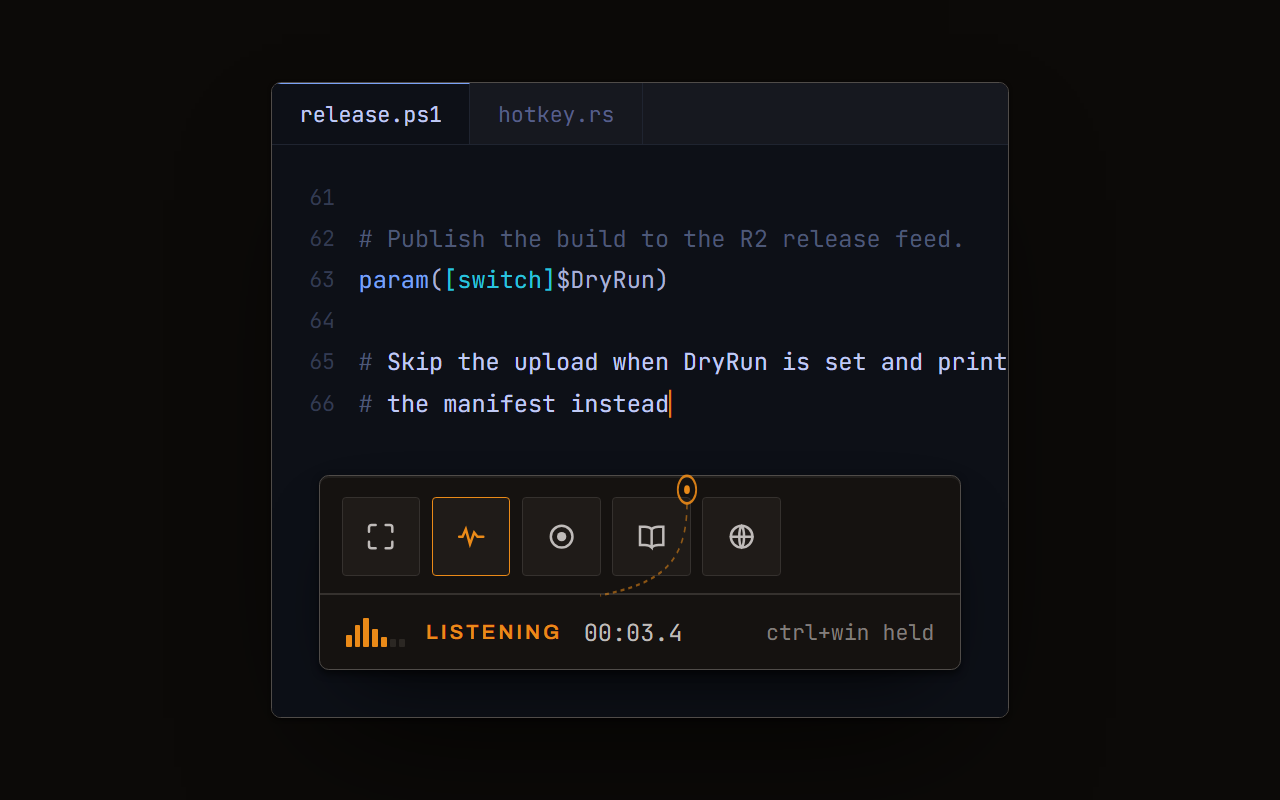
Dictation, where your cursor is
Hold a key, speak, release. Clean, punctuated text lands in whatever has focus, on your PC, your Mac and your phone, with your clipboard handed back.
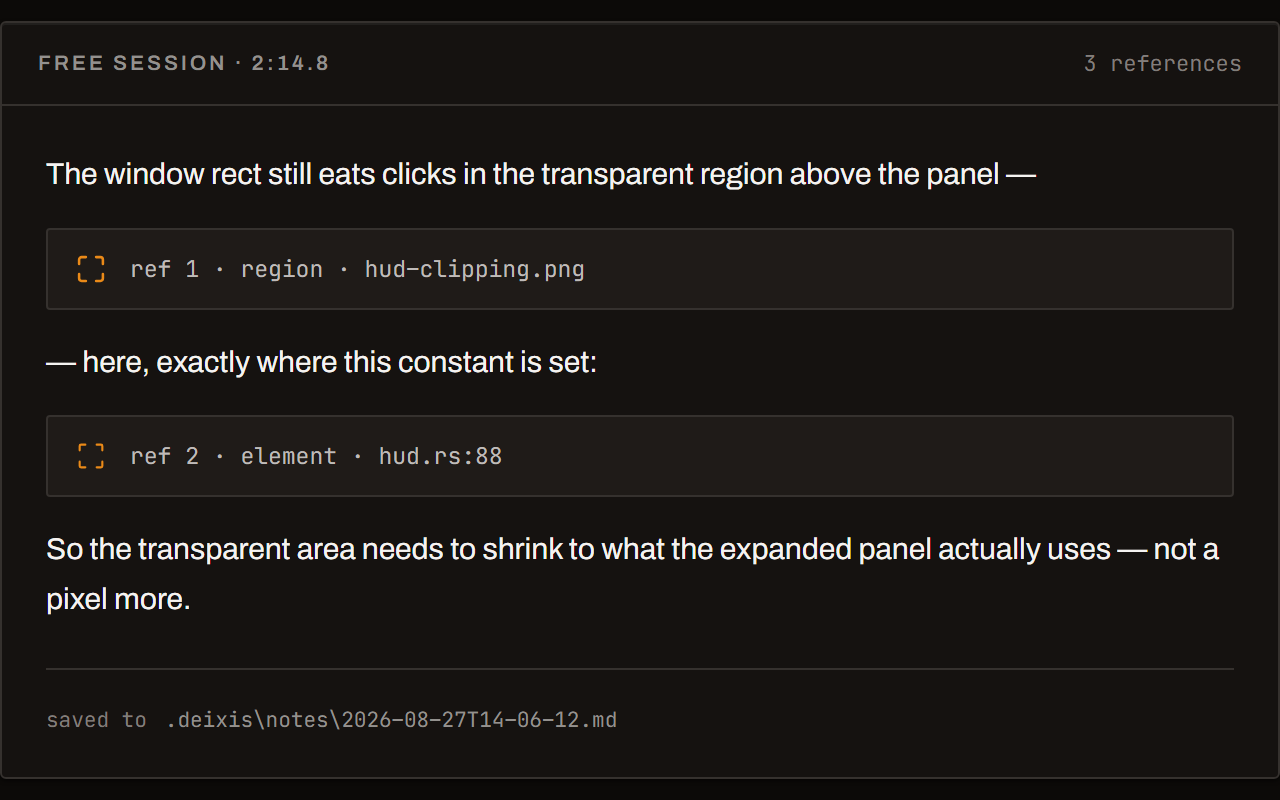
Free mode: talk and point
Narrate for as long as you like while you grab a region, pick a button on screen or take a selection. One note, what you said interleaved with what you pointed at, pasted where you finish and saved as Markdown.
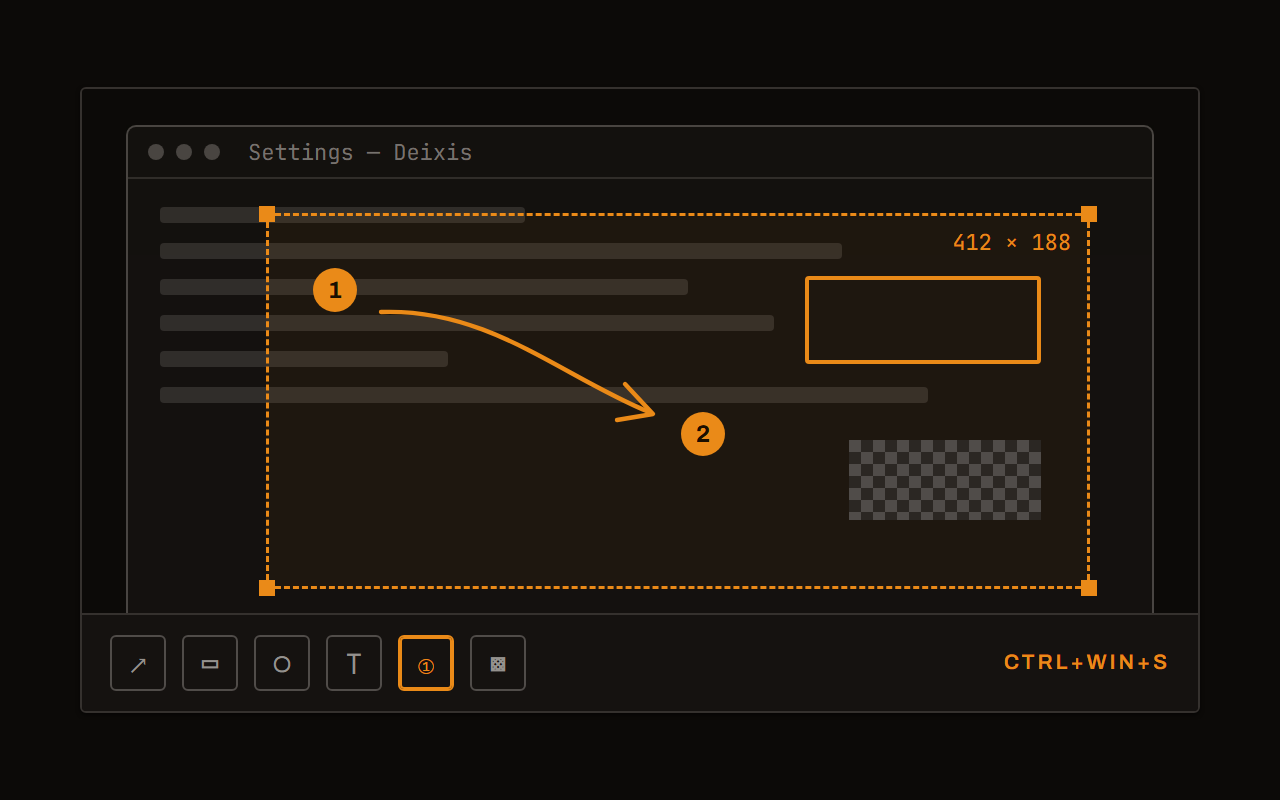
Screen grabs, annotated
Freeze every screen at the keypress, drag a region, add arrows, boxes, text and numbered steps, and pixelate what is private. Saved as a PNG that stays editable.
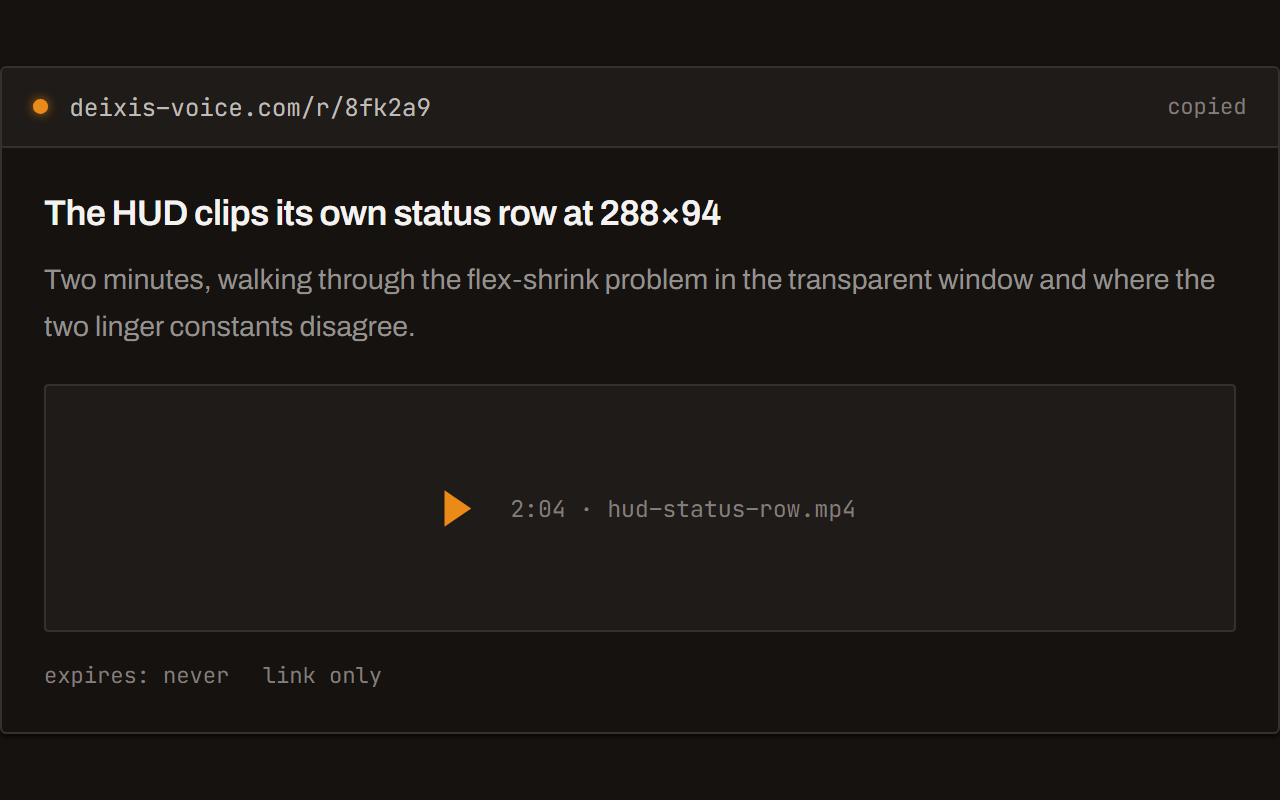
Screen recording, shared as a link
Record the screen with your narration. The recording writes itself up with a title, chapters and a summary, and from your Deixis account it shares as a link anyone can open without one. The Loom you can stop paying for.
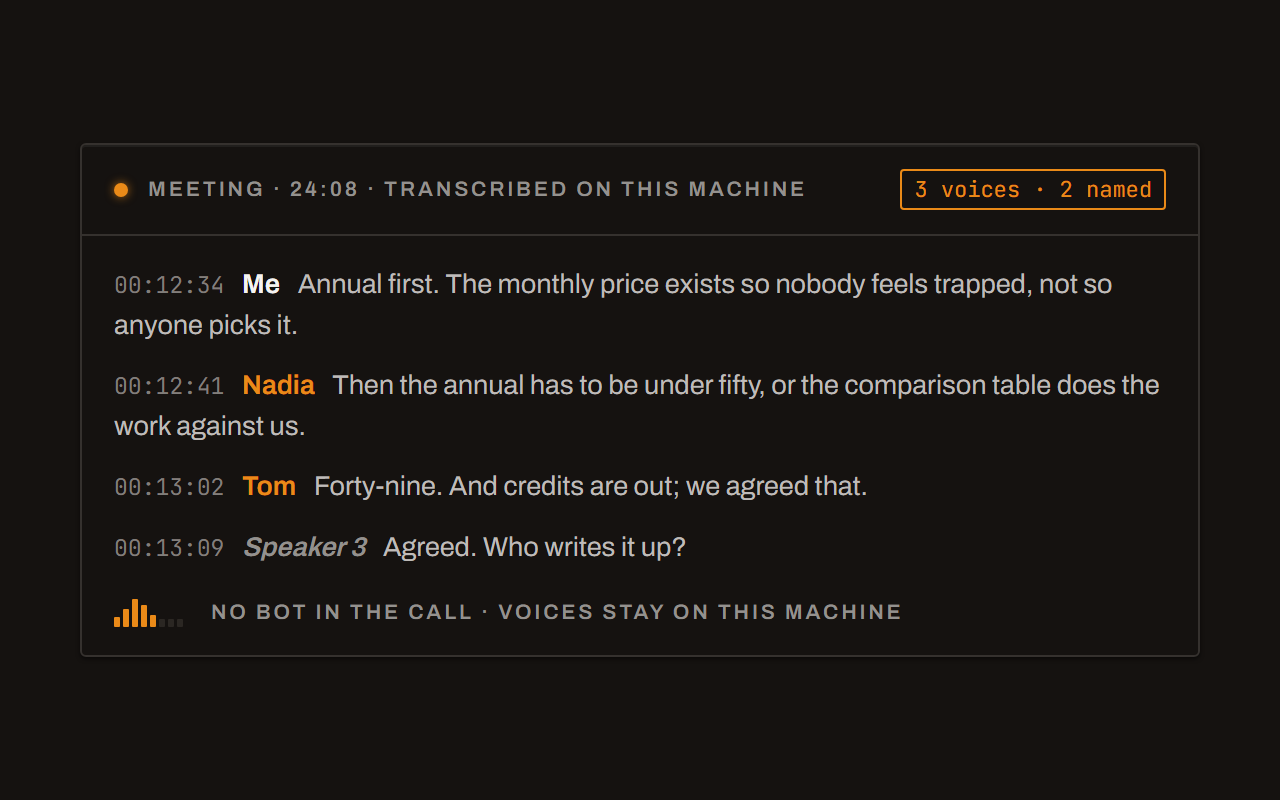
Meetings, no bot, names included
Your microphone and the other side, transcribed on your machine while the call runs. Deixis tells the voices apart and remembers the ones you name, and never uploads a voice.
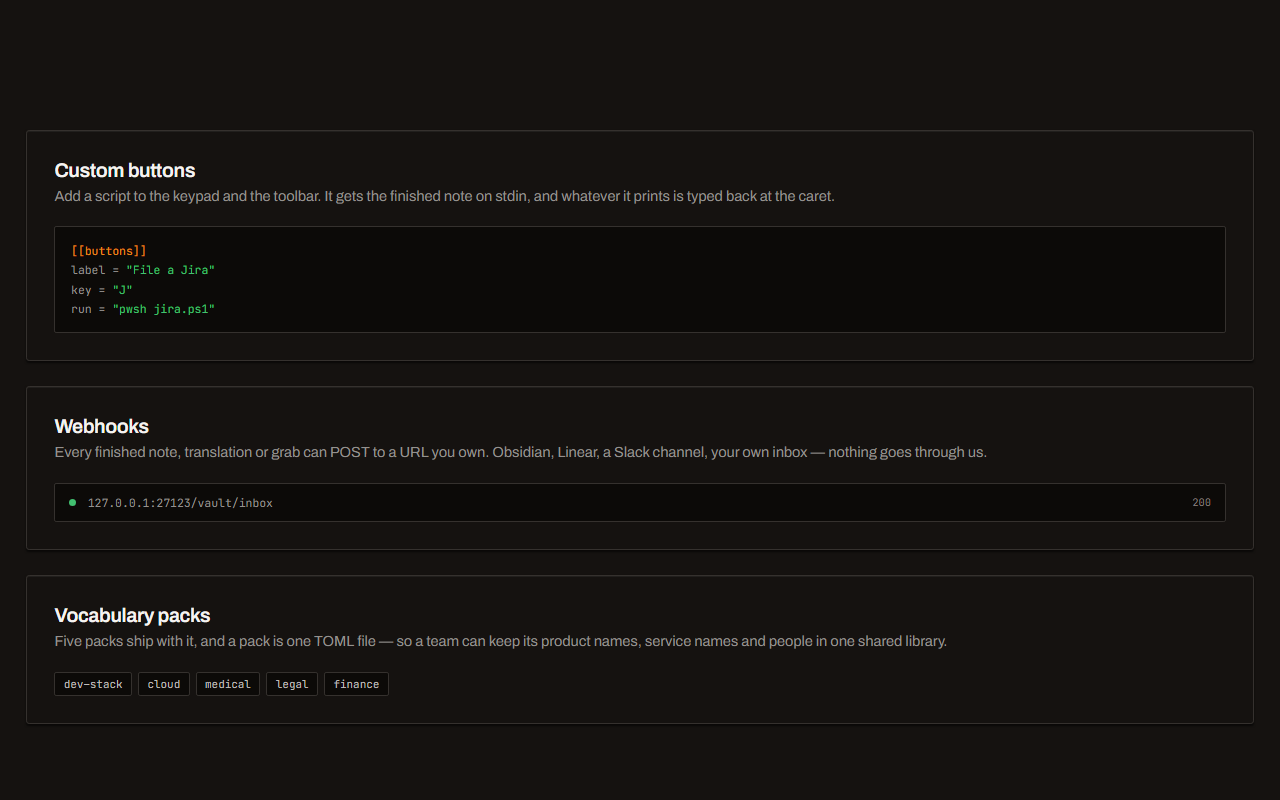
Your own buttons and workflows
Add a button to the palette: it gets the note on stdin and types back whatever it prints. Send finished notes to any URL you own. Chain steps: read the text off a screenshot, translate it, summarise it, post it.
Side by side
Talon and Deixis, side by side
| Row | Deixis | Talon |
|---|---|---|
| Runs on | Windows 10 and 11 (64-bit, on an Intel or AMD processor with AVX2: 2013 and later; no build for Windows on ARM), Mac (Apple Silicon) and Android (a dictation bubble in any app, plus meetings), with an iPhone keyboard in beta on TestFlight and not yet in the App Store. Meetings run on Windows and Android. One engine on all of them, and dictation audio never leaves the device. | Windows 8 or newer, macOS 10.13 or newer, Linux (X11 only) |
| Speech recognition happens | On your own device, inside the app, on every platform. Dictation audio never leaves it; a meeting's, only if you turn on cloud processing on Android. | On your device |
| AI cleanup happens | On your device, with no provider at all. Or, if you want more, Deixis's cloud, your own Ollama, or your own key. Your choice, in one setting. | None |
| Leaves your machine | Text, and only once you switch a cloud feature on, plus, on Windows, one key you press to check your own Claude plan, and, on Android, a meeting's audio if you turn on cloud processing for meetings. Never a dictation's audio, never screenshots, never window titles. | Nothing |
| Account needed | None, ever, for anything that runs on your device. The cloud extras have a seven-day trial you start with an email code. No card. | not documented |
| Price | Free forever for everything local, meetings included. Pro is $49 a year for the cloud extras with nothing to set up. | Free tier: the public release is a free download from its own site; $25 a month; that monthly figure is the Talon Beta tier on Patreon, for early access and priority support, not the price of the app |
| Your transcripts live | In plain files, in one folder you own and can back up. Uninstall Deixis and every note is still readable. | not documented |
| Make it yours | Add your own buttons that run a script, send finished notes to any URL you own, and switch on vocabulary packs for your field. | Every voice command is a script you or the community wrote, in Python and Talon's own file format; eye tracking with a Tobii tracker; Dragon can be used as the recognition engine |
Talon facts from patreon.com, its privacy policy, home, its docs and changelog, read on 5 September 2026. “Not documented” means those pages did not say.
Talon is a hands-free computer-control system first: its docs say it aims at programming, gaming and full desktop use for people with limited or no use of their hands. Its speech engine is downloaded into the app, its licence says the usage metrics it sends exclude speech, text and screen contents, and crash reports upload automatically on the next start.
What leaves your machine, and what leaves theirs
Deixis publishes every byte it sends, as a table, because there is so little of it. Here is that table beside what Talon's own pages say.
| What | Deixis | Talon |
|---|---|---|
| Audio | A dictation's, never: recognition happens inside the app on your device, and the recording, the model and the transcript stay there. A meeting's, only if you turn on Deixis cloud processing for meetings on Android: its audio, in pieces, each its own request, and Deixis stores and logs none of itapi.deixis-voice.com, then Whisper on Cloudflare Workers AI · only on Android, after a meeting ends, with cloud processing switched on in Settings › Meetings — on Wi-Fi, or on mobile data only if you choose | Nothing: the licence agreement says its metrics 'do NOT record actual input, speech, text, or screen contents', and the recognition engine is one you install into the app from its Speech Recognition menu— · — |
| The dictated text | The sentence you just dictated, your vocabulary, and your previous sentence in that fieldthe endpoint you chose · only with a cloud endpoint set, and by default only when the local rules are not enough | Nothing: the same sentence excludes 'input' and 'text'— · — |
| Context around the text | The names of the app and the field the text is going into. Never the window title, never a screenshot.the same endpoint · with that request | Nothing: the same sentence excludes 'screen contents'— · — |
| Telemetry and analytics | None. No account, no telemetry, no analytics, no crash reports. | Usage-based metrics, 'mostly numerical Talon app/script performance information and percentage ratios', that 'may be uploaded to a Talon-owned server', and crash reports, which are uploaded automatically on the next start after a crashTalon's own server · when metrics are uploaded is not stated; a crash report the next time Talon starts |
| Update check | Nothing but the request; the version check happens on your PCapi.deixis-voice.com · every launch, and when you ask in Settings | Your IP address and app version, 'if you opt into automatic updates'the Talon update server · periodically while Talon is running, only if you opted in |
| Model download | Nothing but the requesthuggingface.co · once, when you press Download on first run | A download of the Conformer speech model from the Speech Recognition menunot stated · when you install the engine |
| Account and sign-in | An email address, only if you choose to start the trial, plus the partner tag from a partner download link and the first partner website that connected to Deixis on this computer, if there are anythe Deixis endpoint · when you start the trial | not documented |
| Integrations | The finished note, and for a screenshot its file name, never the imagea URL you added yourself · on finish, only for destinations you added | The community packages system 'may log, store, and transmit information about which plugins are installed and their frequency of use'not stated · when you use community packages |
Before you switch
Before you switch
Who should not switch
If you have limited or no use of your hands, or an injury that makes a keyboard painful, stay with Talon: it exists for exactly that, its community has spent years on it, and Deixis needs a key held or tapped to listen. If you code by voice with commands, navigate by voice, or want a system you can script to the bone, Talon is that and Deixis is not. If you are on Linux, Deixis does not run there. And if you dictate in a language other than English, Deixis's speech models are English models and this is not your tool yet.
Making the switch
Most people who move from Talon to Deixis are not leaving Talon for accessibility; they tried it for dictation and found the setup more than the job needed. Here is what changes.
Talking
Talon listens for commands; Deixis listens while you hold Ctrl+Win. Hold, speak, release: the
text lands at the caret and your clipboard is put back. Double-tap the chord for free mode, which
keeps recording until you double-tap again, then pastes the finished note and saves it. The chord
can be remapped in Settings, to another chord or a single function key, if Ctrl+Win is taken.
Scripts
There is nothing to clone. Every setting lives in one file in one folder, and the Settings window edits the same file. Where Talon has user scripts, Deixis has two much smaller things: custom buttons that run a program or post to a URL and can type the result back at the caret, and webhook integrations that send a finished note wherever you point them. The first run of a command button asks your permission and shows the exact command line.
Words and names
Whatever your scripts taught Talon to spell gives way to a dictionary. Select a word anywhere,
press Ctrl+Win+D, and it is in your vocabulary; switch on a pack for your field in a click; add a
replacement for anything it keeps mishearing. The dictionary is a plain file you can edit directly
too.
Cleanup
Deixis punctuates and structures your dictation from how you spoke and where the text is going. Settings → Cleanup chooses when a language model helps: When it helps, Every time, or Never. With no endpoint set, every mode runs as rules on your PC and nothing leaves. If you want a language model without the cloud, point Deixis at a model server on your own machine.
Meetings and the screen
Ctrl+Win+M records a meeting, both sides, transcribed on your PC, with the remote voices told
apart and named on the device. Ctrl+Win+S grabs and
annotates a screenshot, Ctrl+Win+V records the screen. All of it lands in one folder as files you
can open with anything.
Before you ask
Questions people search for
Is Talon good for dictation?
Talon is a voice-control system first, and it will not recognise anything until you add scripts; its docs say the best way to start is to clone the community repository. If dictating prose is the whole job, Deixis does that with no setup: hold a key, speak, and punctuated text appears where you were typing.
Is Talon free?
Its public release downloads from its site for Windows, macOS and Linux with no price asked. The paid part is a Patreon tier at $25 a month, for early feature access and priority support. Deixis is free forever for everything that runs on your PC, including meetings, and charges $49 a year only for the managed cloud extras.
Does Deixis work hands-free?
Partly: double-tap Ctrl+Win and it keeps listening until you double-tap again, so you can dictate
a long note without holding anything. But starting and stopping still takes a key, and Deixis does
not control the computer by voice. If you cannot use a keyboard, Talon is the right tool and this
page will not tell you otherwise.
Does Talon send my speech anywhere?
Talon's licence agreement says its usage metrics "do NOT record actual input, speech, text, or screen contents", and it describes crash reports and, if you opt in, an update check that sends your IP address and version. Deixis sends none of those, and the audio of a dictation never leaves the machine under any setting.
Can I use Deixis for coding by voice?
For the text, yes: Deixis dictates into your editor, a terminal or a pull-request page, and because it knows which field it is in, a commit message and a chat reply come out punctuated differently. It does not run editor commands or move the cursor by voice; that is Talon's job.
Do I need an account for Deixis?
No, not for anything that runs on your PC. The only thing an email address is ever asked for is the optional seven-day trial of the cloud extras, which you start yourself with an emailed code, with no card and no password.
Keep reading
Related pages
Best dictation software for Windows
Fifteen Windows dictation tools compared, every fact dated from the maker's own pages — including what our own tool cannot do. Read the disclosure.
Offline dictation on Windows
Dictation that works with no internet: speech recognition on your own device, free, no account. Which Windows speech-to-text tools genuinely run offline.
The Otter.ai alternative without the bot
Otter puts a bot in your call and your audio in its cloud, with minute limits. Deixis records both sides locally, names the voices, free, no account.
The Whisperstream alternative that is free, and does more than dictate
Both dictate on your PC, no upload, no account. Deixis is free, knows which field you are in, records meetings and the screen, and runs on Mac and phone.
The Handy alternative that does more than fill a text box
Handy and Deixis both dictate on your own computer, free, with no account. Deixis also knows the field you type in, records meetings and runs on Android.
The OpenWhispr alternative with no cloud switch to get wrong
OpenWhispr is open source and goes local or cloud. The Deixis app recognises only on your PC, Mac or phone: free, no account, no switch to get wrong.
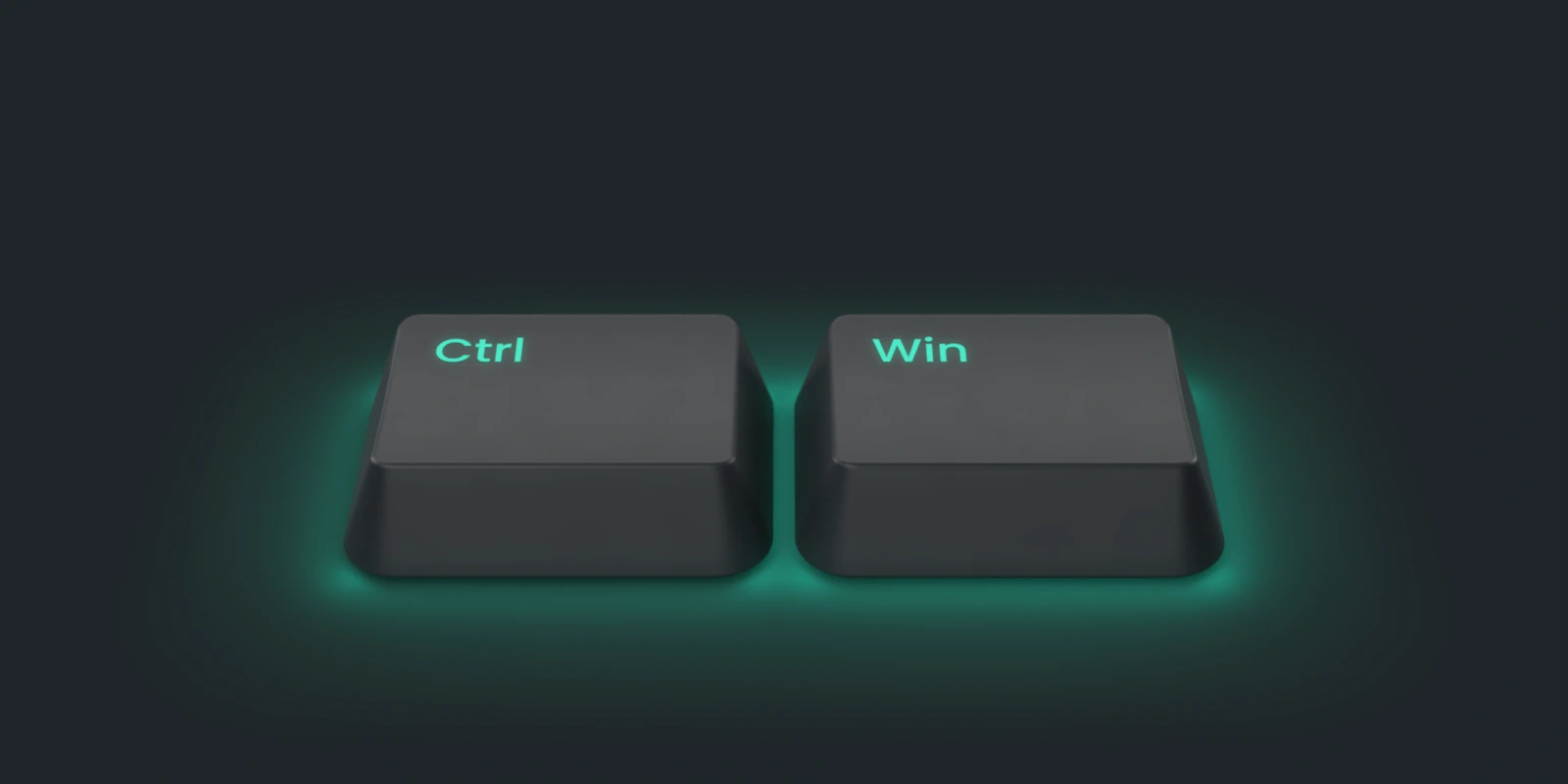
Hold a key. Speak. Keep working.
Deixis is free, needs no account, and runs on your own device. Everything on this page is in the current release.
v1.3.2 · 64‑bit Windows 10/11 on Intel or AMD · macOS 13 on Apple silicon · 51 MB · nothing else to install · also for Windows · Android on Google Play
Facts about Talon checked on against talonvoice.com. Deixis facts are from its documentation for the current release. Something out of date? Tell us.