Runs on your device · dictation audio stays on it · no account
Private voice typing, wherever you type.
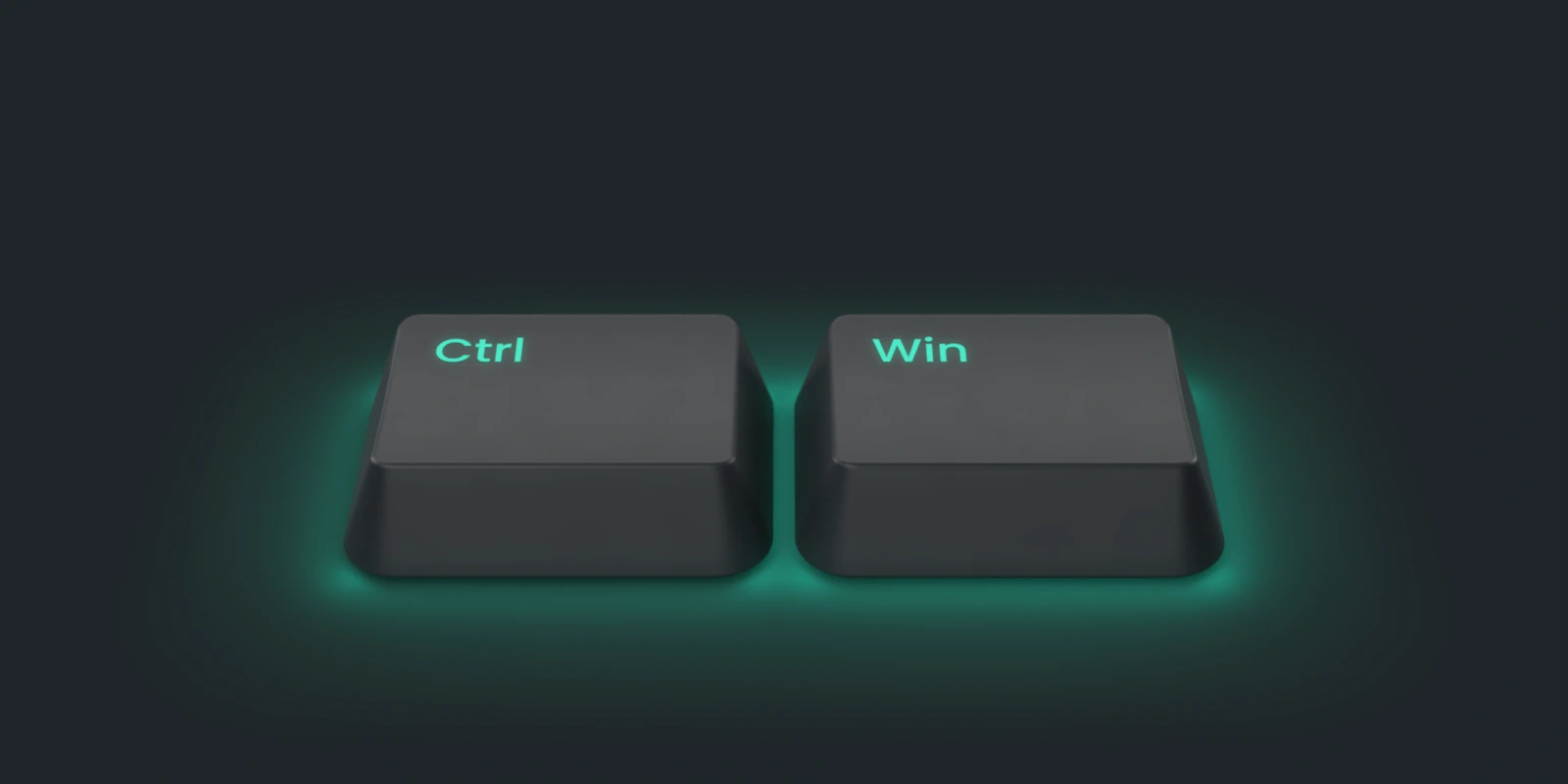
Hold Ctrl Win (Ctrl ⌥ on a Mac), speak, and let go: clean, punctuated text lands wherever you were typing — an email, a document, a chat, a prompt for your AI agent. On Android, a floating microphone types into any app's text field. And in free mode on a PC or a Mac, grab text, screenshots or the element under your cursor while you talk, and each lands where you said it.
Deixis is dictation software that does its speech to text on your own device, in English, with cloud cleanup only if you set it up. Your dictation audio never leaves it, you need no account to dictate, and the full list of what does leave fits in one table you can print.
v1.3.2 · Windows 10/11 ·
macOS 13 on Apple silicon · 51 MB ·
nothing else to install ·
also for Windows
free forever, with no account — see pricing
Get it on
Google Play
Deixis for Android — dictate into any app,
and record meetings. iPhone: in beta.
01 · The one gesture
Three seconds, start to finish.
Everything else in Deixis is a variation on this. There is no record button, no review step and no paste.
01
Hold the chord
The panel appears beside your cursor and arms. Nothing is recorded until it does, and the keys stay yours: release and the letters are letters again.
CtrlWin
02
Say the sentence
The level moves with your voice, so you can see it is hearing you without looking away from what you are writing. Fillers, stutters and false starts come out.
−12 dB · 00:03.4
03
Release
The text is typed at the caret and your clipboard is handed back untouched. Where your speech became text:
On this device
It works wherever you type — in Outlook, Slack, Claude Code, Cursor and VS Code, with nothing to install into any of them. The same app is a free voice to text tool, screen recorder and screenshot tool for Windows. Coming from Wispr Flow or MacWhisper? Here is how they compare.
Every appDouble‑tap instead of holding and it keeps listening until you tap again, for the prompt you are still thinking through.
Free modeDeixis in four numbers
5
Vocabulary packs built in
Software, accounting, business, medical and legal words, free, with room for packs of your own.
0
Bytes of dictation audio uploaded
Recognition is in‑process. Dictation audio never leaves the machine, ever.
2
Network calls of its own
The update check at launch, and a check for an announcement when Settings opens, which you can switch off. Neither sends anything but the request.
—
Accounts required
None. Deixis never asks you to sign in to dictate.
02 · Hold the chord, press a letter
Eight modes, one muscle memory.
While the chord is held, the mode keypad appears and its letters go live for five seconds. Press the letter or click the chip, and the letters are letters again.
hold
Dictation
Cleaned, punctuated text at the caret, in whatever app has focus.
F
Free mode
Narrate for as long as you like and point at things as you go. The note carries both.
S
Screen grab
Freeze the screen, drag a region, mark it up, send it as a link.
M
Meeting
Records your mic and the call, transcribed on this machine. No bot joins.
V
Video
Record the screen with narration, pause when you need to, share a link instead of a file.
T
Translate
The selection translated into the language you choose, with copy and replace. Speech itself is recognised in English.
D
Vocabulary
Send a selected word straight into the dictionary so it is never wrong twice.
C
Usage
How much of your Claude plan is left, the five‑hour and the weekly limits, as bars beside the cursor.
03 · Free mode · the part nothing else has
Say it, and point at it.
The product is named after the words whose meaning depends on where you are pointing: this, that, here. Free mode is that idea made real. Narrate for as long as you want and, while you talk, grab a region of the screen, pick a UI element, or take a selection. The finished note interleaves what you said with what you pointed at, and every reference is saved as its own file beside it.
Paste it into Claude Code, Codex or Cursor and the agent gets what a colleague at your desk would have got: the words, and the pictures, in the order you said them.
Pasted at the caret when you finish. Markdown, with the screenshots and picked elements beside it as files an agent can open.
Bug reports, code reviews, handovers and prompts, dictated at the speed you think.
Every reference keeps its own file, so the note is still useful in a year.
04 · Meetings
An hour of talking, transcribed on your own CPU.
Deixis records your microphone and the system output, so both halves of a call are captured, and transcribes the whole thing locally. The recording, the transcript and the audio are files in a folder you own. Notes on top of it are one optional call away.
Summary, decisions and action items from an hour of recording.
Each meeting named from what was said in it, so a month of them reads as subjects, not timestamps.
No bot joins your call. Nothing is invited, nothing announces itself.
05 · Sharing
Send a link instead of a file.
A grab or a screen recording becomes a page with a title and a summary written for you, the thing a colleague can open and understand without you narrating it a second time. Record, pause, stop, share: the walkthrough you would have made in Loom, without another app, and the person you send it to needs no account at all.
06 · Privacy, in full
Here is every byte that leaves your machine.
Deixis exists partly because we were not comfortable with how much other dictation tools can see. So this is not a policy page; it is the actual list. No account, no telemetry, no analytics, and nothing the app sends carries a dictation’s audio. Audio leaves in two cases, and you start both: a website’s mic, in your browser, when Deixis isn’t taking it, and a phone’s meetings, if you turn on Deixis cloud processing for them — and Deixis keeps none of it, either way. A narrated screen recording leaves only when you press Share a link.
| What | What is sent | Where | When |
|---|---|---|---|
| Update check | nothing but the request — the version comparison happens on your machine | api.deixis‑voice.com | every launch |
| Speech model download | nothing but the request | huggingface.co | first run, when you press Download |
| Announcements | nothing but the request — which notices you have dismissed stays on your machine and is never sent | api.deixis‑voice.com | whenever the Settings window opens, which is every sign-in unless you have cleared Show Settings when I sign in — but not in the week after any pop-up has been shown, and not at all with announcements switched off |
| Claude usage | the Claude Code sign‑in already on this machine, and nothing of yours: no body, no audio, no text, no transcript | api.anthropic.com — Anthropic's, not ours | only when you press its key, or the popup's refresh |
| Cloud dictation on a website | one take’s recording, from your browser, not the app: a website’s Deixis mic, used when Deixis here isn’t taking it. With it, the website’s origin, your IP address and its key terms, and Cloudflare’s Turnstile check, in your browser | api.deixis‑voice.com, then Whisper on Cloudflare Workers AI — Deixis stores none of it, Cloudflare does not train on it | only when you press that mic, and the line beside it says so every time |
| Meeting audio, for cloud processing | a finished meeting’s audio, in pieces, each its own request, with your vocabulary terms and any names you gave Deixis for it — Android only, in the body of the request | api.deixis‑voice.com, then Whisper on Cloudflare Workers AI — Deixis stores and logs none of it, Cloudflare does not train on it | only with Deixis cloud processing switched on in Settings › Meetings (Pro or the trial), after a meeting ends — on Wi-Fi, or on mobile data only if you choose |
| Cleanup | the transcript, your vocabulary terms, and where it is going: the focused app, the control and field name, and your previous utterance in that field | the endpoint you configure — ours routes only to zero‑data‑retention model endpoints | only when rules are not enough |
| Translate | the selected text and your vocabulary terms | the same endpoint | when you press the key |
| Meeting notes | the meeting transcript | the same endpoint | at the end of a meeting |
| Meeting title | the opening of the transcript — about 1,500 characters, not the whole session | the same endpoint | at the end of a meeting, unless you named it yourself |
| Screen recording title and summary | the recording's transcript | the same endpoint | when a recording is written up, at the end of one that had a microphone or when you press Summarise |
| Uncertain-word check | the finished dictation, note or meeting transcript, the words it was unsure of, and your vocabulary terms — and of a free-mode note only what you said: no quote, attribution, screenshot link or page address | the same endpoint | only with one of its switches on, all off as shipped: at the end of a meeting or a free-mode session, and before a dictation it is about to ask you about |
| Uncertain-word suggestions | the word you clicked and the paragraph it sits in — never a whole note, a screenshot link or a page address — the words you have already settled there, and your vocabulary terms | the same endpoint | when you click an underlined word |
| Integrations you add | the finished note, and for a grab its path and filename — never the image | the URL you enter | on finish |
Never sent, under any setting
Dictation audio from the app. A PC’s recorded meeting WAVs. Window titles, which are the most identifying thing on your screen. No setting sends any of those; a phone’s meetings go to be transcribed in the cloud only if you turn that on. The one thing that uploads a file is Share a link, which you press for one grab, note or screen recording — including whatever you narrated into it.
The bottom eight are off until you configure them
With no endpoint set, dictation falls back to the local rules engine and Deixis works entirely offline. Two calls a fresh install makes on its own — the update check at every launch, and the check for an announcement when you open Settings — and neither carries anything but the request.
07 · One setting decides all of it
Where does the model run?
A language model is a second pass on top of the local rules, and it needs somewhere to live. Deixis asks that once, in plain words, and shows you what each answer means before you pick it. Two of the four answers send nothing at all.
The table above is the whole of it for the desktop. The full privacy policy covers the phone apps too — including exactly what the Android dictation bubble reads, and what it never does.
08 · No database, no sync, no lock‑in
Everything is a file, in one folder you can back up.
Your notes are markdown. Your settings are TOML you can edit in a text editor and reload without restarting. Your history is JSONL. If you uninstall Deixis tomorrow, everything it made is still readable, and a coding agent can read every one of them today.
~/.deixis/ · %USERPROFILE%\.deixis\ on Windows
- config.toml
- every setting, integrations and buttons
- dictionary.toml
- vocabulary, fixes, filler words
- notes\
- free‑mode notes as markdown, with their references
- screenshots\
- grabs as PNG, still re‑editable
- sessions\
- meetings: audio, transcripts, notes
- history.jsonl
- every dictation, with what it cost
09 · On your phone
Deixis on your phone.
The same dictation on Android today, and on iPhone in beta. Use the floating microphone on Android, or switch to the Deixis keyboard on an iPhone and hold its microphone key, speak, and the words land in whatever you were writing, recognised on the phone itself, so your dictation audio never leaves it. On Android the dictionary is there too, so you can teach it your names and jargon.
10 · Make it yours
It ends at a shell command, not a plugin API.
Deixis has no extension marketplace. It has stdin, stdout and your own URLs, which is what scripts, automations and AI agents already speak.
Custom buttons
Add a script to the keypad and the toolbar. It gets the finished note on stdin, and whatever it prints is typed back at the caret. One line hands a dictated note to an agent and types its answer back.
[[buttons]]
label = "File a Jira"
key = "J"
run = "pwsh jira.ps1"
Webhooks
Every finished note, translation or grab can POST to a URL you own. Obsidian, Linear, a Slack channel, your own inbox. Nothing goes through us.
127.0.0.1:27123/vault/inbox
200
Vocabulary packs
Five packs ship with it, and a pack is one TOML file, so a team can keep its product names, service names and people in a file of its own and hand it round. The software pack already knows that “use effect” is useEffect.
- software development
- accounting & finance
- business & product
- medical
- legal
11 · Pricing
Free forever. Pro replaces four subscriptions.
Everything that runs on your machine is free, forever, with no account: dictation, free mode, grabs, recordings, meetings. Pro adds the cloud parts with no key to obtain. Count what it stands in for: the dictation app, the screen recorder, the screenshot tool, the meeting notetaker, each on its own subscription and each with its own copy of your audio. Pro exists because obtaining a provider key is a ten‑minute detour most people never come back from.
Free
$0
forever, and with no account at all
Dictation, free mode, grabs and annotation
Meetings, recorded and transcribed locally
History, export, dictionary, all vocabulary packs
Screen recording, saved as MP4 with a transcript
Custom buttons and webhooks to your own URLs
Your own key
$0
plus whatever your provider charges you
Everything in Free
Cloud cleanup, translation and meeting notes
Or run a local model instead: Ollama and friends
Nothing metered by us, no account with us
A supported path, not a loophole.
Pro
$49/ year
less than half what paying monthly costs
Everything above, with no key to obtain
Share a grab, a note or a recording as a link
Meeting notes written for you at the end of a call
Translation of a selection, in a popup at your cursor
It works the moment you install it
No card. An email address and a code, when you choose to start it.
In US dollars, before local sales tax or VAT — added at checkout where it applies. Sold through Polar as our merchant of record, so the receipt comes from them. Cancel any time and keep what you paid for to the end of the period.
For organisations
Rolling it out across a team?
What makes Deixis private is already true on every plan: recognition runs on each machine, dictation audio never leaves it, and a meeting’s leaves only where someone turns on cloud processing for a phone’s meetings. What an organisation usually wants on top is a say in where everything else goes — and somebody to answer for it.
Seats from $49 per person per year. Beyond that — your own model, a service inside your own network, a rollout shaped around your policies — we would rather hear what you actually need than quote you a package.
Enterprise
Seats managed centrally, on one invoice
Cleanup, translation and meeting notes pointed at your own model
Or at an OpenAI‑compatible server inside your own network
Deployment and configuration worked through with your IT
A written answer to every question your security review asks
Seven days, and they start when you say so.
The trial does not begin the day you install. You start it when you are ready — an email address, a six‑digit code, and seven days of everything on the Pro list. No card, and nothing to cancel.
When it ends, only the cloud extras stop and everything local keeps working exactly as before. Nothing is taken away, and nothing stops working offline.
| What it does | On the trial? |
|---|---|
| Cloud cleanup of a dictated utterance | seven days |
| Meeting notes | seven days |
| Translating a selection | seven days |
| Share links for grabs, notes and recordings | seven days |
| Dictation, transcription, recording, your dictionary | yours, always |
| Anything that runs on your machine | yours, always |
12 · Before you ask
The honest answers.
Does it work in Word, Google Docs and Gmail?
Yes. Deixis types at the cursor of whatever app has focus, so Word, a Google Doc or a Gmail reply in your browser, Outlook, Slack and a web form are all the same to it, and there is nothing to install into any of them. So are a terminal and a code editor. On Android the floating microphone types into any app's text field.
Which devices does it run on?
Windows 10 or 11, 64-bit, on a CPU with AVX2 (Intel Haswell or AMD Excavator, 2013 and later), and Macs with Apple silicon on macOS 13 or later. On Android it is on Google Play, and the iPhone keyboard is in beta on TestFlight. The Windows floor is a hard one: speech recognition is compiled against it, so an older CPU stops with an error rather than running slowly. The Mac build is for Apple silicon only.
Which languages does it understand?
English. The speech models Deixis ships are English models, so it is built for dictating in English, and if you dictate in another language it is not the tool for you. On a PC it can translate, though: select text anywhere, hold Ctrl+Win and press T, and the selection comes back in the language you choose. Translation needs a cleanup model: Pro, the trial, your own provider key, or one running on your own machine.
Does it work offline?
Yes. The speech to text runs on your device once the speech model has downloaded on first run, and working offline is the default. Clear the endpoint and dictation falls back to the local rules engine; meetings still record and transcribe. What wants a network is optional: cloud cleanup, translation, meeting notes and titles, a screen recording's title and summary, share links, webhooks and the Claude usage key.
Is Deixis free?
Yes. Deixis is a free voice typing app for Windows and Mac, and for Android: everything that runs on your device is free forever, with no account. That is dictation, free mode, screen grabs, screen recording, meetings recorded and transcribed on Windows and Android, the dictionary and all five vocabulary packs. What costs money is the managed cloud part, at $49 a year or $10 a month: cloud cleanup, translation, meeting notes and share links. Your own provider key opens all of those but the share links for nothing. If you stop paying, only those stop; your notes, history, grabs and meetings are files on your disk and stay readable.
Is it safe to install?
The Windows installer is code-signed with an EV certificate, so Windows names Dappit as the publisher rather than warning you about an unknown one, and it installs for your user alone, with no admin prompt. The Mac build is a notarized disk image, and the Android app is on Google Play. There is no telemetry, and everything the app sends is listed row by row on this page.
How is this different from Wispr Flow, or the dictation built into Windows?
The recognition happens on your device. When we checked on 5 September 2026, Wispr Flow's privacy page said its transcription always happens in the cloud, and Microsoft's support page said Windows voice typing uses online speech recognition and needs an internet connection. Deixis also sends none of what you say until you switch a cloud feature on, needs no account to dictate, and on a PC lets you point at what you mean while you talk.
Is it open source?
No; Deixis is proprietary. Everything it sends is listed row by row, and the cleanup endpoint is a setting, so you can point it at a server you control and see exactly what arrives.
Stop typing what you could say.
Free forever, no account, and your dictation audio never leaves your device. Install it, hold the chord, and say the email, the note or the prompt the way you would say it to a colleague. You will know inside a minute.
v1.3.2 · Windows 10/11 · macOS 13 on Apple silicon · 51 MB · also for Windows