Dictation for VS Code
A day in the editor is not only code. It is the prompt you write in the chat panel, the comment that explains why the workaround is there, the commit message, the pull request body, the reply to the reviewer, the ticket you file because you found something else on the way. That is the half of the day made of sentences, and sentences are quicker said than typed.
Deixis is voice input for exactly that. Hold Ctrl+Win, say the paragraph, let go, and clean
punctuated text is typed straight into whatever field you were looking at, with your clipboard
handed back the way you left it. There is nothing to install into VS Code, no window to switch to,
no transcript to copy and no account to make.
That last part matters more here than anywhere. Deixis is not a VS Code extension — it is not an extension for anything. It types wherever your cursor already is, so the one key dictates your prompt, your email, your ticket, your chat and your browser's address bar. An editor extension only ever works in that editor; this is one voice input for the whole machine, on Windows, Mac, iPhone and Android, with speech recognition on the device every time and audio that never leaves it.
Why Deixis
What it gives you in VS Code, and what it will not do
Why Deixis in VS Code
- One key for the whole machine, not one editor's feature. The chat panel, a source file, the integrated terminal, the Source Control box — and then the browser tab with the pull request in it, the ticket tracker, Slack, the address bar. You learn one gesture and it is everywhere, including on the Mac and on your phone, with the same on-device speech recognition on each.
- It punctuates for the field you are in. A prompt, a code comment, a commit line and a PR body all read differently, and Deixis knows which one it is typing into, because the name of the app and the name of the control ride along with the words. Never the window title, and never anything on your screen.
- It knows your stack's words.
shadcnanduseEffectcome out spelled the way you write them, corrected on your own machine before anything is sent anywhere. Five vocabulary packs ship in the box, the software one is on by default, and adding a word takes one key press. - Free, with no account and nothing to sign into. Dictation, both speech models, the dictionary, meetings, screen grabs, screen recording, your own buttons and webhooks: all free, none of it gated. VS Code's own dictation needs AI features enabled, which means signing in with a GitHub account. Deixis never asks you to sign in to dictate.
- Point as well as talk. Double-tap the key and Deixis keeps listening while you drag a region of the screen, pick a button or take a selection. What you said and what you pointed at come out as one note — which is most of a good bug report, dictated in the time it takes to describe it.
- Grab the screen without leaving the keyboard.
Ctrl+Win+Sfreezes the monitor under the cursor so you can drag a region, then save it or annotate it — arrows, boxes, a highlighter, text and a pixelate tool for anything you need to redact. Every save keeps a sidecar so the grab stays re-editable rather than flattened. - A recording with a link, for the change you would rather show.
Ctrl+Win+Vrecords the screen with your narration to an MP4, and writes it up with a title and a summary. A recording bar sits on screen with pause and stop. Handing the result over as a link is the one part that needs a Deixis account — the person opening it needs nothing, and the link expires and can be revoked whenever you like. - Meetings, transcribed on this machine.
Ctrl+Win+Mrecords the microphone and, where it can, the system output too, and transcribes both as they run — with no key, no account and no network. It tells the remote voices apart and remembers the ones you name, and the voiceprint that does it stays on the machine, is never uploaded, and can be deleted per person. Neither the audio nor the transcript is ever uploaded. - Your own buttons, and your own webhooks. Put a button on the palette that runs your program with the finished note and types back whatever it prints, straight at the caret: file the ticket and get its key back at your cursor. Chain steps together as plain settings rather than a script, and post any finished note, grab or translation to a URL you own, signed with HMAC and a timestamp so your receiver can prove it is yours and refuse a replay.
- Everything is a file you own. Notes, transcripts, recordings, screenshots, your dictionary and every setting sit in one folder as ordinary files, and your dictation history has its own tab with an export. Back it up, search it, uninstall tomorrow and it is all still there.
What it will not do
- It types in English only. The speech models are English models. VS Code's own dictation takes a language hint and defaults to your system language, so if you dictate in anything else, theirs is the better tool for that and this is not yours yet.
- It does not read your screen or your project. Deixis is dictation, not an agent. It sends the name of the app and the field, never the contents, so it cannot see the diff you are looking at and it does not learn your branch or file names on its own. Your dictionary is how it learns your words, and that is a key press rather than nothing.
- It does not do the things around dictation that VS Code does. No command-line mode that turns spoken symbol names into symbols: Deixis punctuates for the field, but it does not rewrite your speech into shell syntax. Nor does it read answers back to you aloud or listen for a wake word — neither of which is built into VS Code either; both come from the separate VS Code Speech extension.
- It will not transcribe a file you hand it. Deixis transcribes what it records — your dictation, your meetings, your screen recordings. Drop-a-file transcription is not in it.
- No Linux build, and no PC older than 2013. VS Code runs on Linux and Deixis does not, and the speech engine is compiled against an instruction set that arrived in 2013, so an older processor stops rather than running slowly.
- It is not a keyboard replacement. Symbols, paths and flags are still faster typed. Deixis is for the prose half of the work, which is a bigger half than most people expect.
What you get
More than dictation. One key, and everything behind it.
Hold the key and press a letter: free mode, a grab, a meeting, a recording, a translation, your own buttons. All of it on your own device, all of it free, none of it behind an account.
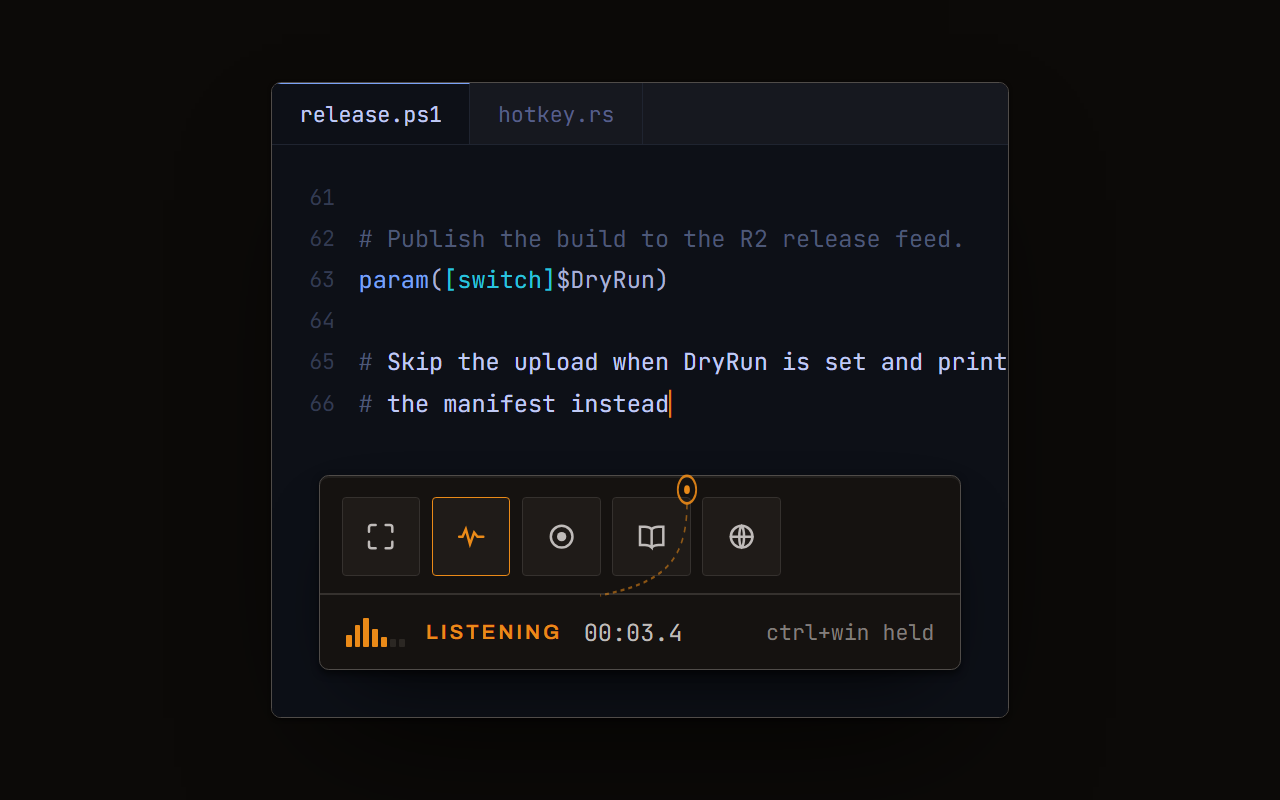
Dictation, where your cursor is
Hold a key, speak, release. Clean, punctuated text lands in whatever has focus, on your PC, your Mac and your phone, with your clipboard handed back.
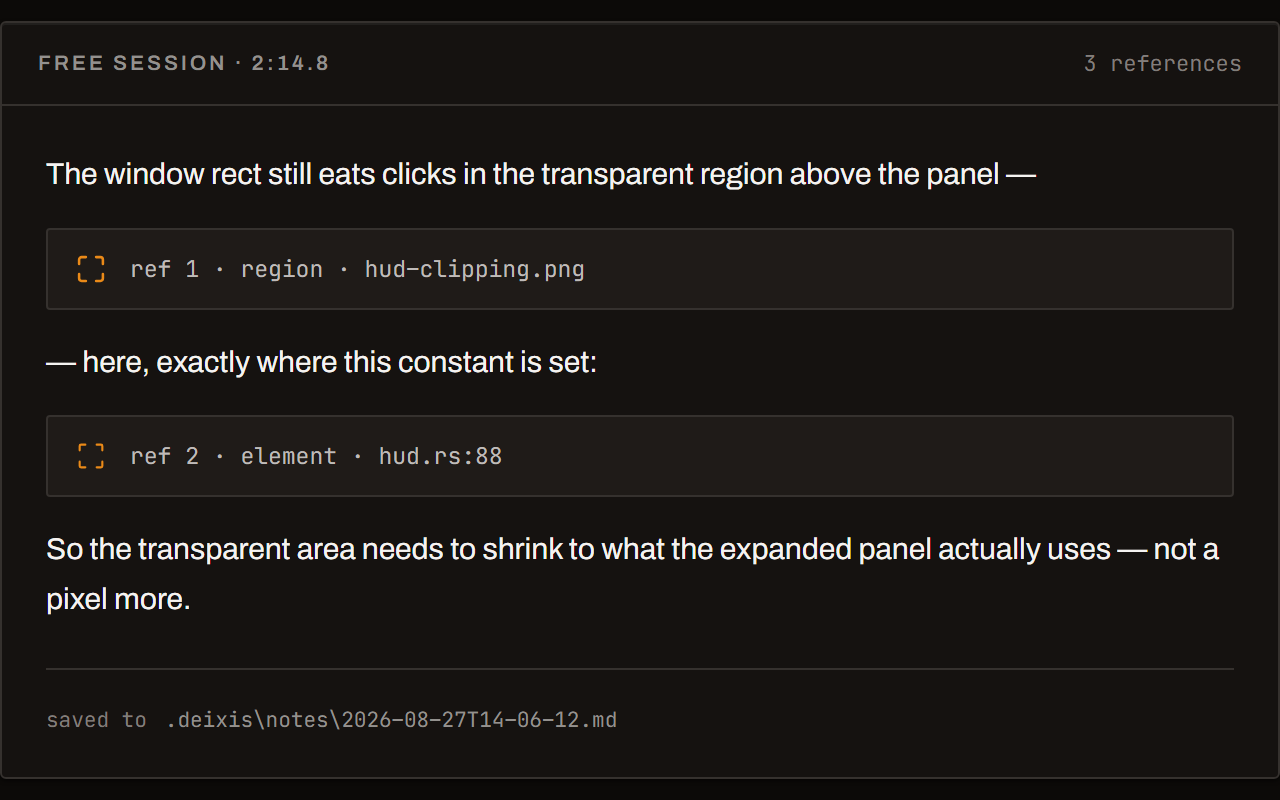
Free mode: talk and point
Narrate for as long as you like while you grab a region, pick a button on screen or take a selection. One note, what you said interleaved with what you pointed at, pasted where you finish and saved as Markdown.
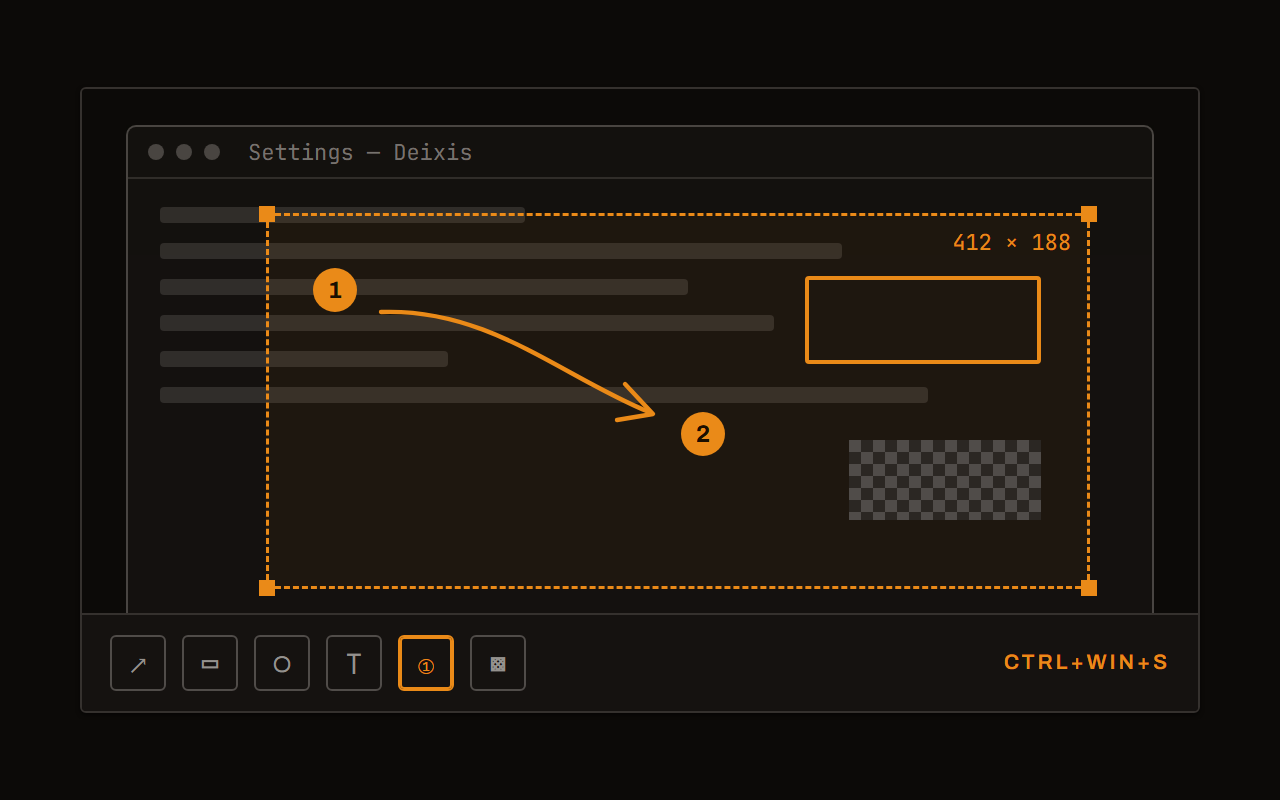
Screen grabs, annotated
Freeze every screen at the keypress, drag a region, add arrows, boxes, text and numbered steps, and pixelate what is private. Saved as a PNG that stays editable.
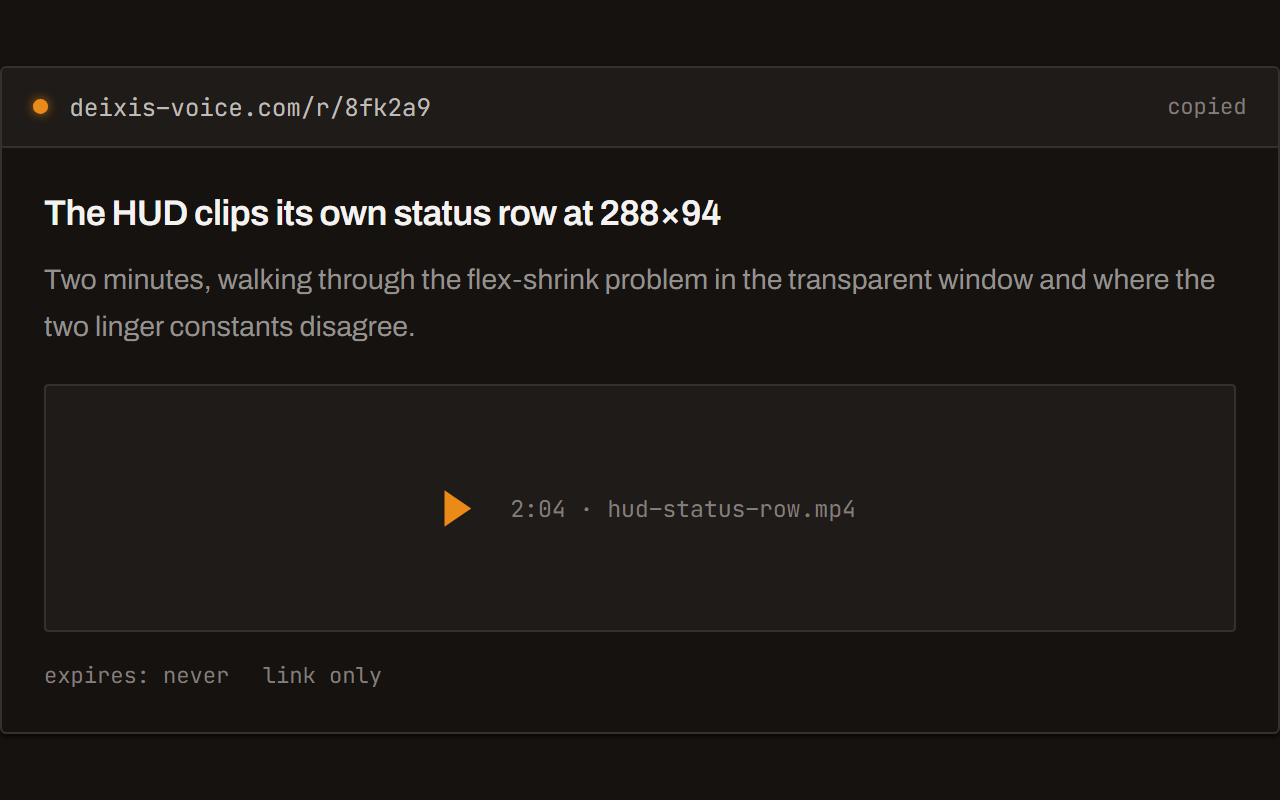
Screen recording, shared as a link
Record the screen with your narration. The recording writes itself up with a title, chapters and a summary, and from your Deixis account it shares as a link anyone can open without one. The Loom you can stop paying for.
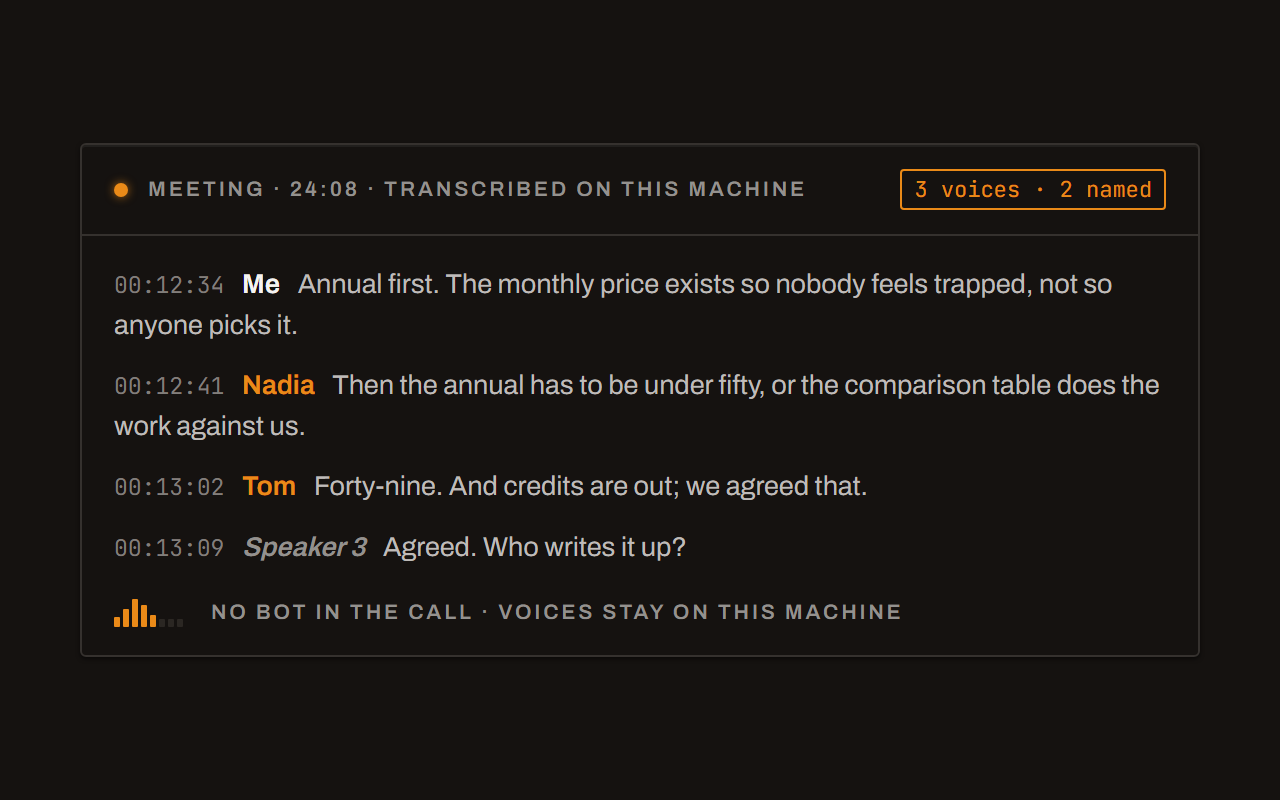
Meetings, no bot, names included
Your microphone and the other side, transcribed on your machine while the call runs. Deixis tells the voices apart and remembers the ones you name, and never uploads a voice.
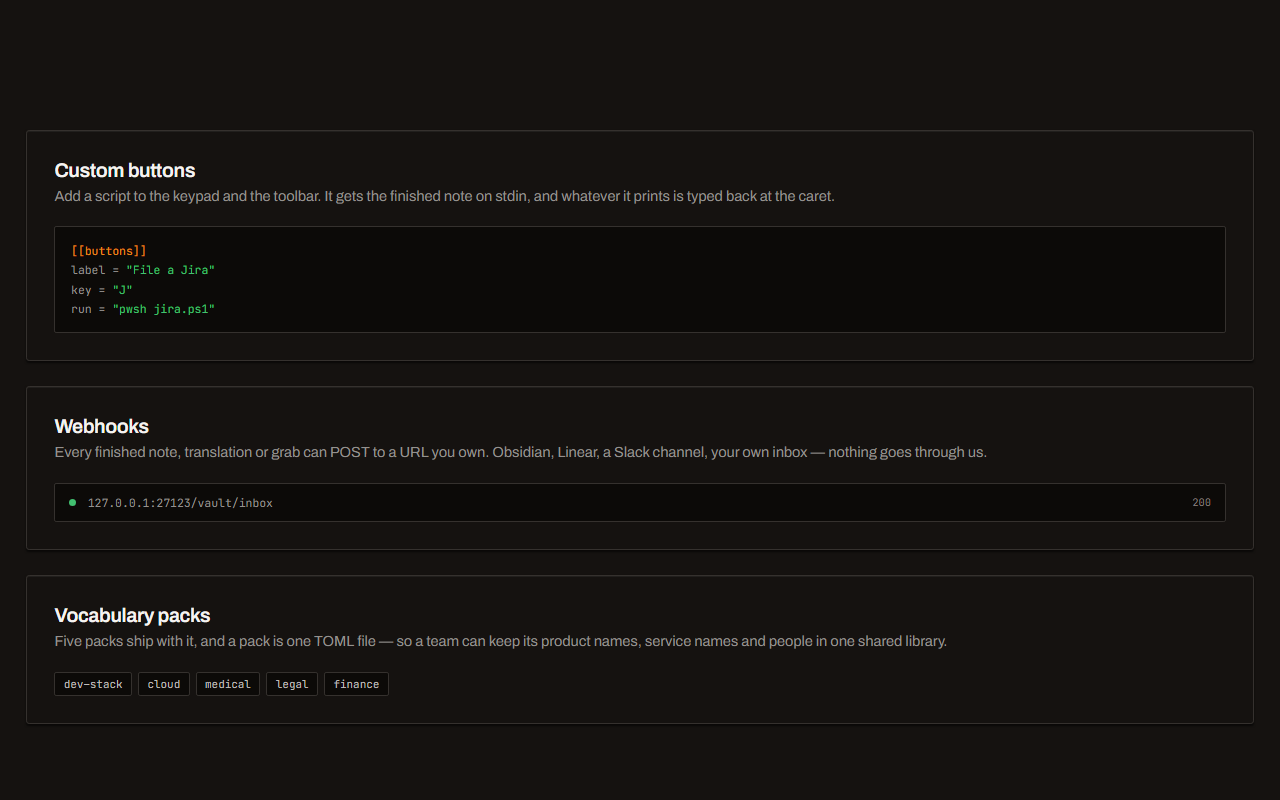
Your own buttons and workflows
Add a button to the palette: it gets the note on stdin and types back whatever it prints. Send finished notes to any URL you own. Chain steps: read the text off a screenshot, translate it, summarise it, post it.
Field by field
The same voice, punctuated for wherever you are in VS Code
Deixis knows which app and which field your words are going into — the name of the app and the name of the control, never the window title and never what is on your screen. A prompt, a message and a commit line therefore come out differently. Here is the chat panel, the editor and the integrated terminal, kind by kind.
| Where you are | What you say | What Deixis types |
|---|---|---|
| A prompt to the chat panelthe Chat view, docked beside your code | “um can you pull the fetch call out of use effect and put it behind a hook so the test can stub it” | Can you pull the fetch call out of useEffect and put it behind a hook, so the test can stub it?The filler goes, the sentence gets a capital and a question mark, and your dictionary spells useEffect the way you write it. |
| A comment in a source filethe editor, at the caret in the file you are reading | “note this runs before the router mounts so don't touch the dom in here” | Note: this runs before the router mounts, so don't touch the DOM in here.A comment is punctuated as one line, and "dom" is corrected to DOM on your machine before anything else sees it. |
| A commit messagethe Source Control message box | “add the spare seat count to the team panel it was only showing seats in use” | Add the spare seat count to the team panel: it was only showing seats in use.A commit line is punctuated as a line. The same words in a chat window would come out as two sentences. |
| A pull request descriptionthe PR body on your review site, in a browser tab | “this moves the cleanup call off the hot path so the insert doesn't wait on the network um and it adds a timeout” | This moves the cleanup call off the hot path, so the insert doesn't wait on the network. It also adds a timeout.A long field gets sentences, because Deixis knows it is a body and not a one-line box — and it is the same key you just used in the editor. |
| A message to a colleagueSlack or Teams, in the window you alt-tabbed to | “the shad kin dialog is fine it was the focus trap in our wrapper that broke” | The shadcn dialog is fine. It was the focus trap in our wrapper that broke.Nothing about this field is an editor, and the key works there anyway. Your dictionary travels with you. |
VS Code facts from setup, voice, settings and copilot, read on 7 September 2026. Everything about Deixis on this page is from its README for the current release.
Worth knowing about VS Code
- VS Code's own setup docs describe it as a free, open-source editor for Windows, macOS and Linux, with a browser version and remote workspaces over SSH, Dev Containers, WSL and Codespaces. Deixis is an extension for none of that: it types at the caret, so it covers the desktop editor and every other window beside it.
- VS Code has dictation of its own, and it is good. Its docs say dictation "uses an on-device speech recognition model by default, so you can dictate without sending audio to an online service", and it works in the Chat and Agents window, in editors and in the integrated terminal.
- It has documented edges. Built-in dictation needs AI features turned on, the docs mark it experimental and warn it "might change or be removed", and they list platforms it is not available on at all — VS Code for the Web, Intel-based Macs, 32-bit and Arm32 systems, and Linux distributions that use musl — where the separate VS Code Speech extension is the answer instead.
- Its cleanup ships on. `dictation.experimental.llmCleanup` defaults to true and "uses a language model to improve punctuation, capitalization, paragraphs, lists, and number formatting in the final transcript"; the voice page says VS Code then sends the transcript text, but not the audio, to a Copilot language model.
- Turning AI features on means signing in: "To use Copilot in VS Code, you need to have access to GitHub Copilot with your GitHub account." Without a subscription you are signed up for the Copilot Free plan, with a monthly allowance of inline suggestions and AI credits.
- Where VS Code beats Deixis outright: `agents.voice.language` takes a language hint and defaults to `auto`, the system language, so its dictation is not English-only, and terminal dictation adapts speech for the command line, removing ordinary punctuation and converting spoken symbol names. Reading chat answers back aloud and the "Hey Code" keyword are not built in — the voice page puts both in the separate VS Code Speech extension.
Five minutes
Setting it up
About five minutes, and nothing goes into VS Code at all.
Install and fetch the model
One installer, with no runtime and nothing else to install. The first launch shows a single Download button for the speech model — about the size of a short video, fetched once, and checked against its published size and hash before it is kept. From then on you are offline unless you choose otherwise.
The gesture
Hold Ctrl+Win, speak, release. That is the whole product. Double-tap it instead and Deixis keeps
listening until you double-tap again, which is the one for a long prompt you have not finished
thinking through. Hold the chord a moment longer and a small palette appears with a letter per
mode: S grabs and annotates a region, M records a meeting, T translates what you have
selected, and D puts the word under your cursor into your dictionary; Ctrl+Win+V records. If
the chord fights something in your setup, Settings captures a new one as you press it.
Teach it your words
The single biggest improvement, and it costs nothing in speed. Select a package name in a README or
a symbol in a diff, press Ctrl+Win+D, and it is in your vocabulary. A name it keeps mishearing can
be corrected once and stays corrected. The Dictionary tab is that same list if you would rather
edit it in one place, and the five packs that ship are a click each.
Decide what may leave, once
Settings → Cleanup is the only privacy decision to make, and its default is the quiet one: rules tidy your words on this machine unless you asked for a transform or dictated a long stretch with no punctuation. Set it to never, or leave the endpoint empty, and dictation never touches the network at all. Point it at a model running on your own machine and the better prose stays local too. Whatever you choose, the audio is not part of it — that never leaves, and there is no setting that makes it.
Your own actions, if you want them
Worth ten minutes once. A palette button can run a program with your finished note and type back whatever it prints, so "file a bug about the poller reading the feed twice" becomes a ticket and the ticket's key lands at your caret. Your script gets the note as JSON, arguments go to the process as a list so nothing needs escaping, and the first run shows you the exact command line and does nothing until you approve it. A button can also just be steps — translate, summarise, apply an instruction of your own, post to a webhook — with no scripting language and a template library of ready-made ones a click adds.
Before you ask
Questions people search for
Does VS Code have dictation of its own?
Yes, and it is good. Microsoft's own page says dictation uses an on-device speech recognition model by default so you can dictate without sending audio to an online service, and it works in the chat panel, in editors and in the terminal. The differences are that it needs AI features turned on, that the docs still mark it experimental and warn it might change or be removed, and that it stops at the edge of the editor.
Which one should I use?
If you dictate in a language other than English, or you only ever type inside the editor, use theirs. Use Deixis if you want the same key in your ticket tracker, your email and your browser as well as your code, if you would rather not sign in to anything, or if you want the grabs, recordings, meetings and buttons that come with it. Plenty of people run both.
Do I need an extension?
No, and there is no extension to look for. Deixis is a small app that lives in the notification area and types at the caret of whatever has focus, so it works the same in VS Code, in another editor, and in an app that has no plugins at all. Nothing about your editor setup changes.
Can I dictate into the integrated terminal?
Yes. Deixis types where the caret is, and a terminal prompt is a caret like any other. It is one of the places field-aware punctuation matters most: a line you are about to run is punctuated as a line, not as an email. It will not convert spoken symbol names into symbols, though — that is something VS Code's own terminal dictation does and this does not.
Does the cloud ever see my code?
Only if you switch that on, and never the audio or your screen. Out of the box, cleanup runs on rules on your machine. If you turn the optional language-model cleanup on, what goes out is the transcript, your vocabulary terms, your previous utterance in that same field, and the name of the app and the control — deliberately not the window title. Set cleanup to never, or point it at a model running on your own machine, and nothing leaves at all.
Do I need an account or a subscription?
No. Dictation, both speech models, the dictionary, meetings, screen grabs and recordings are free with no sign-in. The optional cloud features are free too if you bring your own provider key or run a model locally. Paying only buys not having to set that up.
Keep reading
Related pages
Voice input for your product, without the audio leaving your user
Put voice input in your web or desktop app in about ten lines. Recognition runs on your user's machine, so no audio reaches you, us, or any cloud.
Offline dictation on Windows
Dictation that works with no internet: speech recognition on your own device, free, no account. Which Windows speech-to-text tools genuinely run offline.
Dictation for Windows Terminal
Deixis dictates into Windows Terminal on one key — commands, commit messages, long notes. Speech recognition on your own device, offline, with no account.
Dictation for PowerShell
Deixis dictates into PowerShell on one key — the prompt, the script, the commit message. Speech recognition on your own device, no account, free.
Voice dictation for Obsidian
Deixis dictates into Obsidian on one key, with no plugin to install. Speech recognition on your own device, and notes that are Markdown files you own.
Dictation for Jira
Deixis dictates Jira tickets on one key. Narrate a bug while you grab the screen, get one note with the picture in it, then file it from a button.
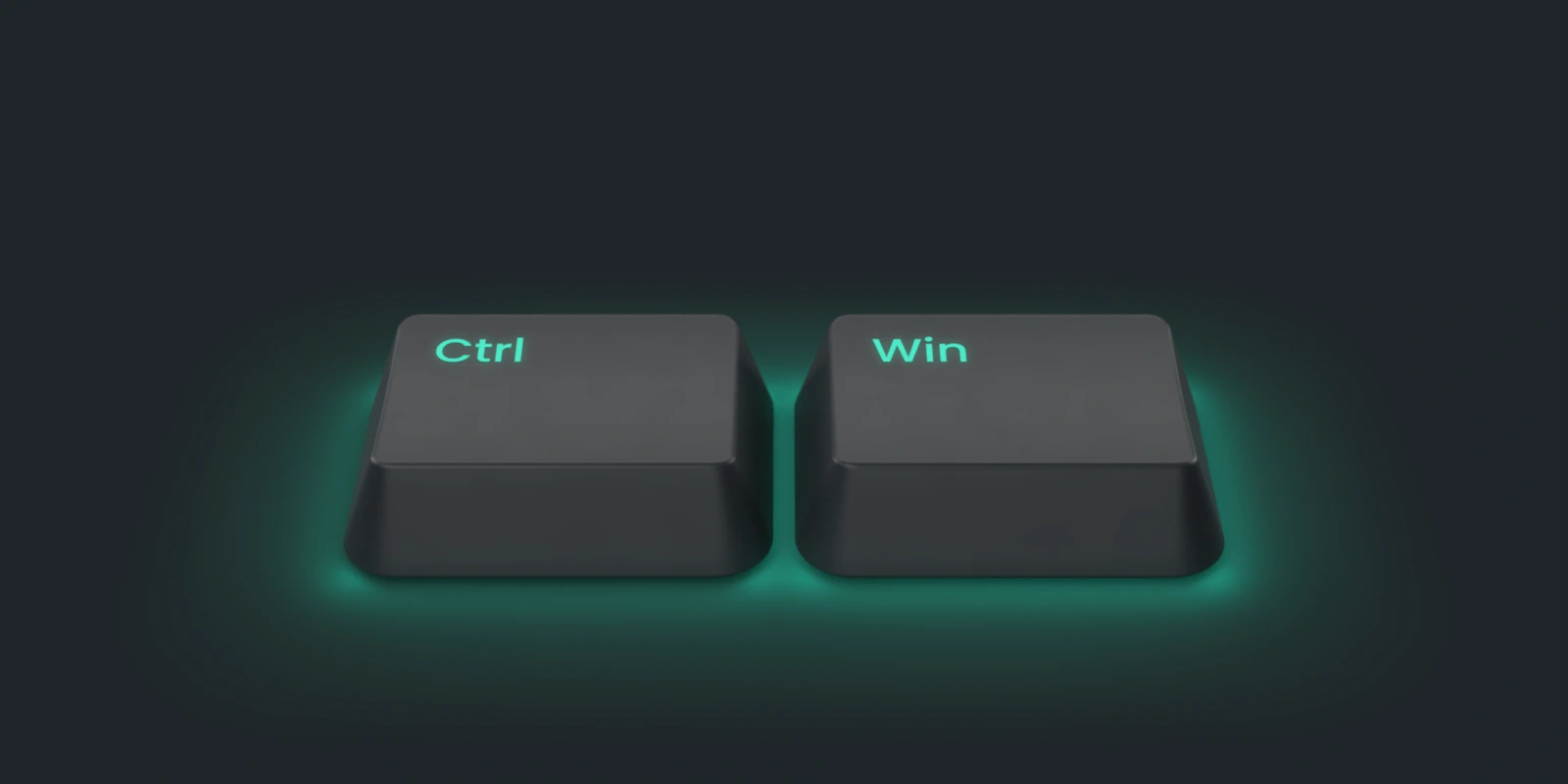
Hold a key. Speak. Keep working.
Deixis is free, needs no account, and runs on your own device. Everything on this page is in the current release.
v1.2.2 · 64‑bit Windows 10/11 · macOS 13 on Apple silicon · 51 MB · nothing else to install · also for Windows
Facts about VS Code checked on 2026-09-07 against code.visualstudio.com. Deixis facts are from its README for the current release. Something out of date? Tell us.