Blog · How-to
Teach dictation your vocabulary: names, jargon and acronyms
Dictation gets names wrong because the speech model has rarely or never heard them, so it writes the nearest words it does know. The fix is to tell it which words to expect, and to correct the ones it still gets wrong — in Deixis that is the dictionary, and on Windows adding a word to it takes one shortcut.
This matters to anyone who dictates, not only developers. A novelist has characters and places no model has met. A solicitor has case names, a clinician has drug names, a student has a lecturer's surname and a reading list. Deixis is private voice typing on Windows, Mac and Android: hold a key (on Android, use the floating microphone), speak, and clean text lands wherever your cursor is, with the speech recognised on your own device. This post is about the part of it that holds your words — which you teach it, because nothing is learned behind your back.
Why dictation gets your words wrong
The speech model hears a sound and writes the most likely words for it. For common words that works
well. For your words it often does not: without any help, the standard model Deixis ships writes
shadcn as "shadkin" and useEffect as "use effect". The same can happen to a colleague's surname
or a product your company sells.
It is tempting to hope an AI tidying pass will catch these. It will not. Deixis's optional cleanup step rewrites prose, not hearing: it never learns what you actually said, so a misheard name stays misheard. Getting names right is the dictionary's job.
How the dictionary works
The Dictionary tab has four parts — Vocabulary libraries, Words to expect, Fixes and
Filler words — and on Windows it is the same thing as the file
%USERPROFILE%\.deixis\dictionary.toml, so you can edit either.
Words to expect are handed to the speech model as a hint of what it is likely to hear, which steers it toward those words when it hears something close to one. This is the lever that changes what the model writes in the first place.
Fixes are find-and-replace, applied to the text after recognition. If it keeps writing "shadkin", a fix turns "shadkin" into "shadcn" every time. A fix matches whole words only, ignores capitals when it matches, and lands the replacement exactly as you typed it. Fixes run in the order they are listed.
Filler words are stripped from what you say. "Um", "uh" and "erm" are already on the built-in list; add your own habits, such as "basically".
In the file, all three look like this:
vocabulary = ["Siobhan", "Okonkwo", "EBITDA"]

extra_fillers = ["basically"]

[[replacements]]
from = "shadkin"
to = "shadcn"
On Windows, adding a word takes one shortcut. You do not have to open anything. Select it wherever
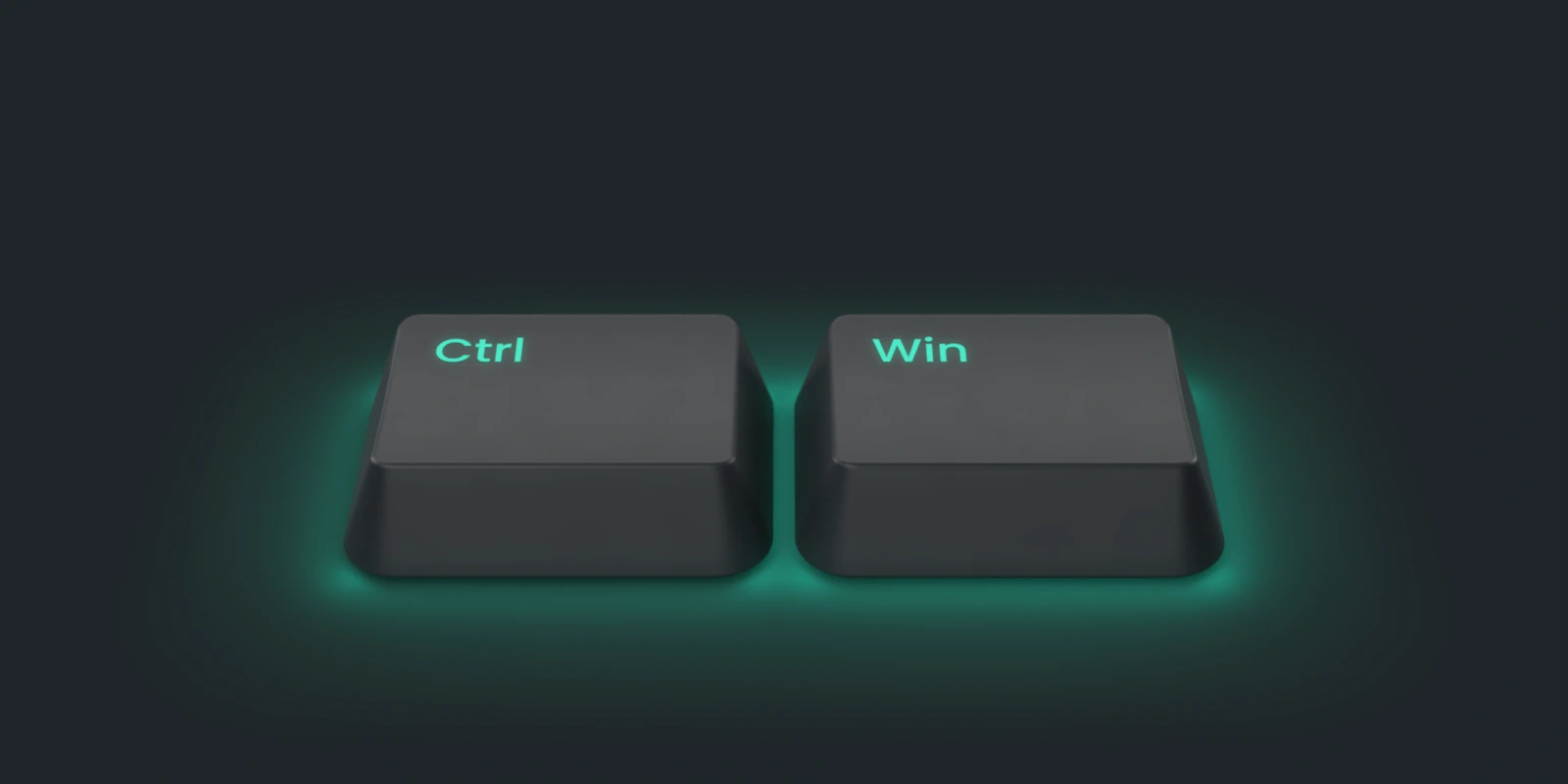
you see it — an email signature, a contract, a page of your notes — and press Ctrl+Win+D. The word or short phrase goes straight
into your vocabulary. With nothing selected, the same key opens a small popup where you type the
word instead. You can also hold Ctrl+Win and press D from the mode palette; the
gestures page lists every key.
Why the list stops at 36
Only the first 36 terms reach the speech model. Each term adds a little to the time it takes to decode what you said, and past 36 the accuracy measurably gets worse — so the cap is a measurement, not a guess. The editor tells you when you are over.
Words past the cap are not thrown away. Up to 256 of them still go to the cleanup model, if you use one, which also carries your spellings into translation. But they stop steering the recognition itself.
Fixes have no cap and cost nothing. Once your words to expect are full, put new corrections in the fixes list instead.
Vocabulary packs
For whole fields rather than single words, Deixis ships five vocabulary packs: Software development, Accounting & finance, Business & product, Medical and Legal. Each is sized to fit under the 36-term cap on its own. Switching on several overflows the cap, and the editor says so rather than hiding it.
The Software development pack is on by default. If you do not write code, switching it off leaves its
room under the cap for your own words. You can also write your own pack: on Windows, drop a .toml
file into %USERPROFILE%\.deixis\packs\ and it appears beside the built-in ones.
Which words to add
- Start with words it has already got wrong. Loading every term you know wastes the 36 places on words it would have heard anyway.
- Names first. Colleagues, clients, authors you cite, characters, places, products — proper nouns are the words a general model is least likely to know.
- A consistent mistake wants a fix. If it writes the same wrong thing every time, a fix repairs it without using one of the 36 places.
- A word it has never heard wants a vocabulary entry. If the mistakes vary, the model does not know the word, and telling it to expect the word is what helps.
- Acronyms and odd capitals suit fixes. The replacement lands exactly as typed, and Deixis's cleanup is not allowed to re-case anything but the first character, so your spelling survives.
- Check the packs before building a list. If you work in finance, law or medicine, a pack may already carry the terms you were about to type in.
If the dictionary is not enough, two other levers help. Settings → Speech model offers a larger model that is more accurate and slower to decode, and the control says by how much. And no software recovers a word the microphone never caught, so a headset beats a laptop's built-in microphone in a room with other people in it. The dictionary documentation covers both.
On your phone, and what leaves your machine
On Android, the dictionary is one of the features carried over to the phone, along with translate, the Library and both speech models. The platforms page lists what the Mac app and the iPhone keyboard, in beta on TestFlight, do today.
The dictionary is a file on your own machine, and it is free, with no account: the dictionary, all five packs and your own are on the list of things that are never gated. Recognition runs on your device, so your words steer it without going anywhere. If you have set up cloud cleanup, your vocabulary terms are sent along with any text it tidies or translates, so it keeps your spellings; with no endpoint, nothing leaves. The full list is on what leaves your machine.
To start, download Deixis, dictate a paragraph you write often — an email to a regular client, say, as in dictation for Outlook — and add whatever it gets wrong. The free voice to text page covers everything else that costs nothing.
Before you ask
Questions people ask
How do I add words to dictation in Deixis?
On Windows, select the word anywhere and press Ctrl+Win+D, and it goes into your vocabulary. With
nothing selected, the same key opens a popup to type the word. You can also add it in the
Dictionary tab.
Why does dictation keep getting names wrong?
A speech model writes the nearest words it knows, and names it has rarely heard come out as something else. Adding a name to your words to expect steers recognition toward it, and a fix corrects a mishearing that repeats.
Is there a limit on custom vocabulary in Deixis?
Only the first 36 vocabulary terms reach the speech model, because past that its accuracy measurably degrades. Fixes — find-and-replace corrections applied after recognition — are unlimited, so put further corrections there.
How do I make dictation get acronyms right?
Add a fix from what it writes to the acronym as you want it. The match ignores capitals and the replacement lands exactly as typed, and Deixis's cleanup does not re-case anything but the first character, so the acronym stays as you spelled it.
Does Deixis have a dictionary on Android?
Yes. The dictionary is one of the features carried over to the Android app, along with translate, the Library and both speech models.
Do my custom words leave my computer?
Not for recognition, which runs on your device. If you set up a cloud cleanup endpoint, your vocabulary terms are sent with the text it cleans up, so it keeps your spellings. With no endpoint configured, nothing leaves.
Keep reading
Related pages
The dictionary, and getting your words right
How to stop Deixis mishearing you: vocabulary terms, find-and-replace fixes, filler words, the five packs, and the 36-term cap that decides which to use.
The one gesture
Hold Ctrl+Win (Ctrl+Option on a Mac) and speak, and the text lands at your caret. Plus every mode on the palette behind it, each on its own letter.
Free voice to text that types where you are
Free dictation that types into any app: hold a key, speak, and punctuated text lands at your cursor. Recognition runs on your own processor.
Dictation for Outlook
Deixis dictates into Outlook on one key — subject lines punctuated as subject lines, bodies as prose. Speech recognition on your device, no account.
How to type by voice in any Android app, with the speech recognised on the phone
Dictate into any Android app's text field from a floating microphone. Speech recognition runs on the phone, and meetings are transcribed there too.
How to type by voice in any app on a Mac, with the speech recognised on the Mac itself
How to type by voice in any app on a Mac: hold Ctrl+Option, speak, let go. Speech recognition runs on your Mac, free and with no account.
Hold a key. Speak. Keep working.
Deixis is free, needs no account, and runs on your own device.
v1.2.2 · 64‑bit Windows 10/11 · macOS 13 on Apple silicon · 51 MB · nothing else to install · also for Windows
Everything this post says about Deixis is from its documentation as of the date above. Something out of date? Tell us.